
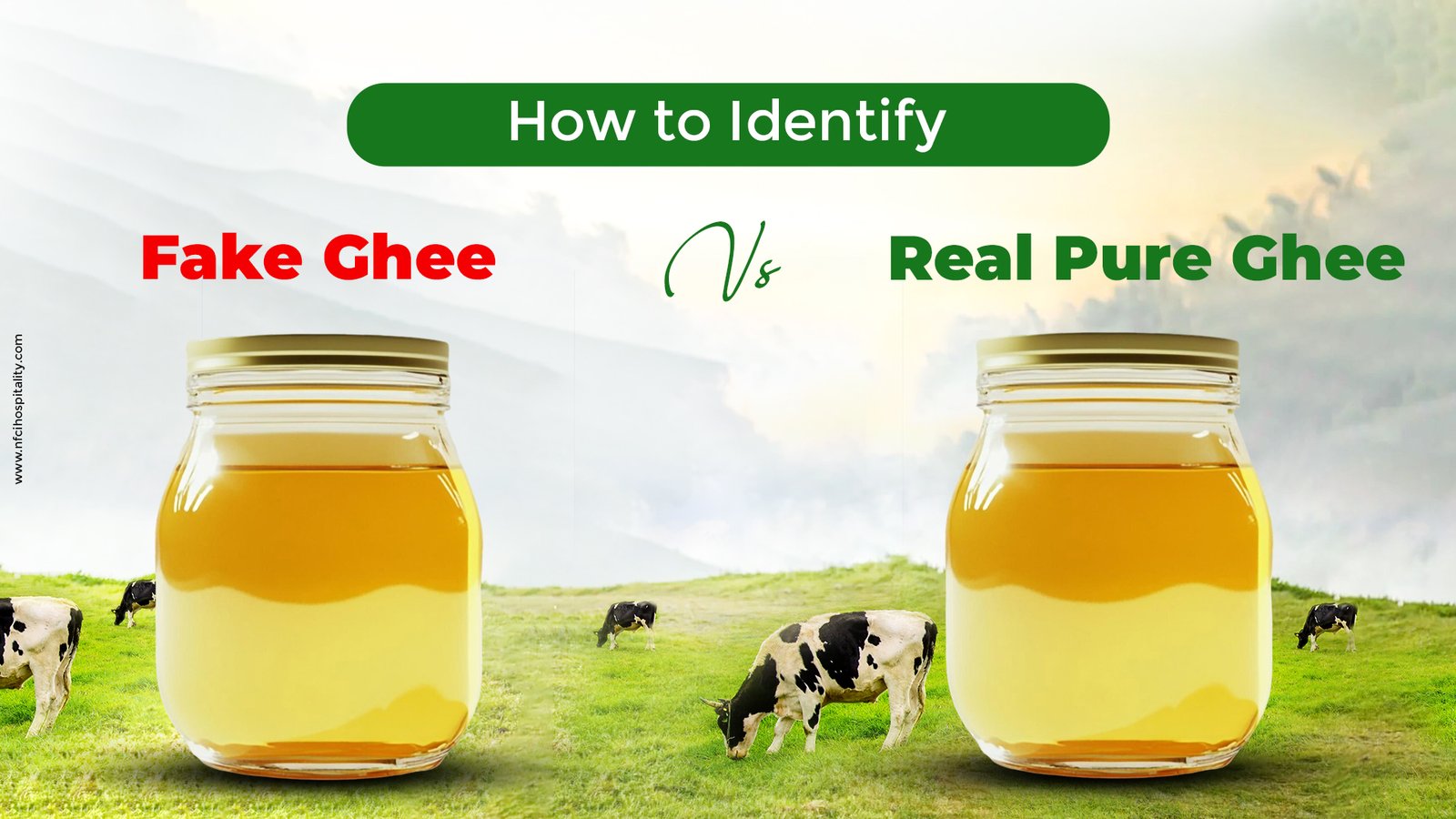
How to Identify Fake Ghee Vs Pure Ghee
Have you ever opened a dabba of ghee and something just feels off? Is this the rich, pure ghee that your mother always trusted but the smell felt synthetic? There is a high chance that it could be a fake ghee as adulteration is becoming highly common now-a-days. Ghee can be harder to detect as it cleverly shows the shine and texture of pure cow ghee and even pure Gir cow ghee.
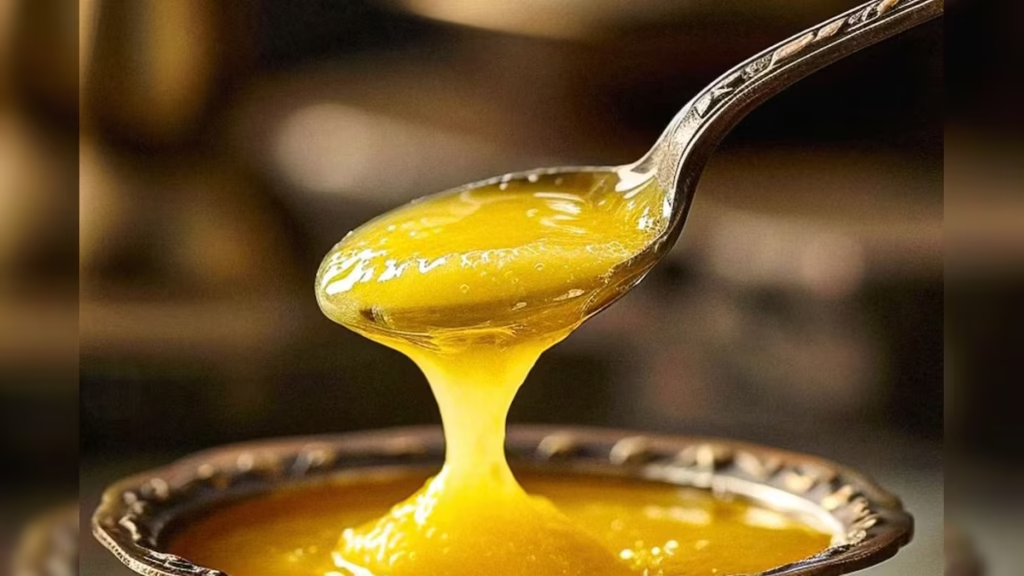
In Indian kitchens, ghee plays an important role that is known as a memory, a tradition, and a promise of purity. But it becomes hard to identify the original pure ghee with so many brands in the market. So, how do you ensure the ghee you’re buying is pure desi ghee? Knowing how to identify real pure ghee can help you protect your health.
Here are a few easy simple ways and clear signs to test ghee purity at home.
1. The Aroma and Taste Test
Real pure ghee made from cow’s milk has a naturally nutty aroma and slightly caramel-like sweet rich taste. This reminds you of homemade tadkas. Fake or adulterated ghee, on the other hand, often smells plasticky, oily, artificial scent or has no aroma at all.
When you taste it, genuine ghee leaves a mild, pleasant aftertaste whereas fake ghee tastes like greasy or waxy.
Quick Test:
Warm a spoonful gently — real ghee releases a rich, desi aroma. Fake ones stay flat or smell artificial.
2. The Texture and Color Test
Authentic pure cow ghee and desi cow ghee naturally develop a granular texture, slightly uneven when set and a natural golden yellow color. On the other hand, fake ghee appears too smooth, creamy, or jelly-like due to hydrogenated oils.
Important: If it looks too glossy or too uniform — it’s probably fake ghee.
3. The Melting Test
Take a spoonful of ghee and let it sit at room temperature. You will observe:
- Pure desi ghee melts quickly and evenly, releasing a pleasant aroma.
- Fake ghee or adulterated ghee stays semi-solid for long, leaving a waxy layer, or turns dark.
When heated in a pan, real ghee turns clear and golden.
Fake ghee turns pale or separates strangely.
4. The Fridge Test (60-Second Result)
Take a bowl of your ghee and place it in the refrigerator for 1 hour.
- Real pure ghee solidifies uniformly.
- Fake ghee separates into two layers — usually white lumps + yellow layer.
This is one of the fastest and clear ways to detect adulteration.
5. The Water Test (Old Grandma’s Method!)
Add 1 teaspoon ghee to a glass of warm water.
- Pure ghee settles at the bottom in a single layer.
- Fake ghee forms small bubbles and starts spreading.
This method is simple, classic, and surprisingly accurate to test the purity of ghee.
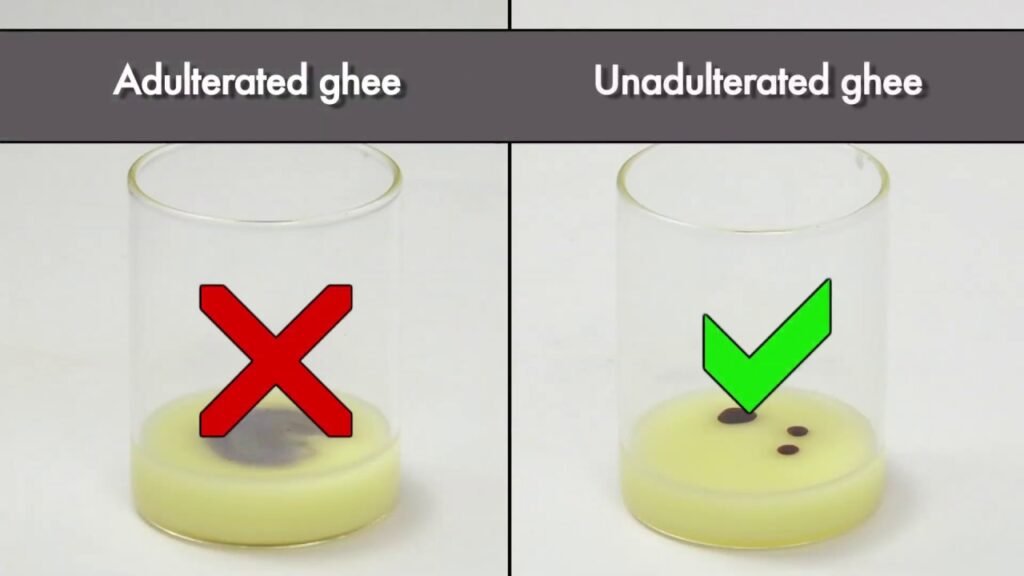
6. The Iodine Test
This is one of the simplest chemical tests you can try safely at home. Mix one teaspoon of melted ghee with a few drops of iodine solution.
- If the mixture turns blue or violet, it means adulterated ghee.
- Pure ghee will show no color change.
7. The Label Truth Test
While purchasing the ghee, always check for:
- “100% Pure Ghee”
- No vegetable oil, palm oil, or vanaspati
- FSSAI license number
- Manufacturing transparency (milk source, cow breed, etc.)
Real brands are confident. Fake ones hide behind vague labels.
8. The Spoon Flame Test (Advanced but Reliable)
Take a small cotton wick and dip it into ghee and light it.
- Pure ghee burns steadily with a bright yellow flame and without residues.
- Fake ghee flickers, gives black smoke, and leaves black soot.
For safety, avoid doing this near a gas flame.
Final Thoughts: Choose Ghee That Chooses Your Health

Identifying the pure ghee is very important for your health. Fake Ghee can fool you with attractive packaging, tall claims, low prices but once you understand their tricks, you’ll never fall for them again.
Always trust your senses, trust the tests, and when possible, trust brands that are transparent about their sourcing.
Want to Learn the Science of Food, Purity, and Culinary Ingredients?
If this kind of topics are what excites you and you dream of mastering professional culinary skills, then it’s the right time to take the next step!
With 35+ years of excellence in culinary arts and hospitality education, NFCI (National Finishing & Cookery Institute)
offers industry-focused culinary courses with practical training, expert chefs, food science knowledge, and hands-on ingredient understanding that make you a true kitchen professional.
This renowned institute offers 100% placement support.
Admissions are open!
Learn cooking, baking, food production, hygiene & safety, ingredient science, and more with NFCI. Ready to transform your passion into a profession?
Enroll in our professional culinary programs or call us at 98880-11222 to book your free counselling session.

You may also like

Delicious Vegetable Salad Ideas For Everyday Meals

7 Hidden Dangers of Beetroot: What You Need to Stop!