

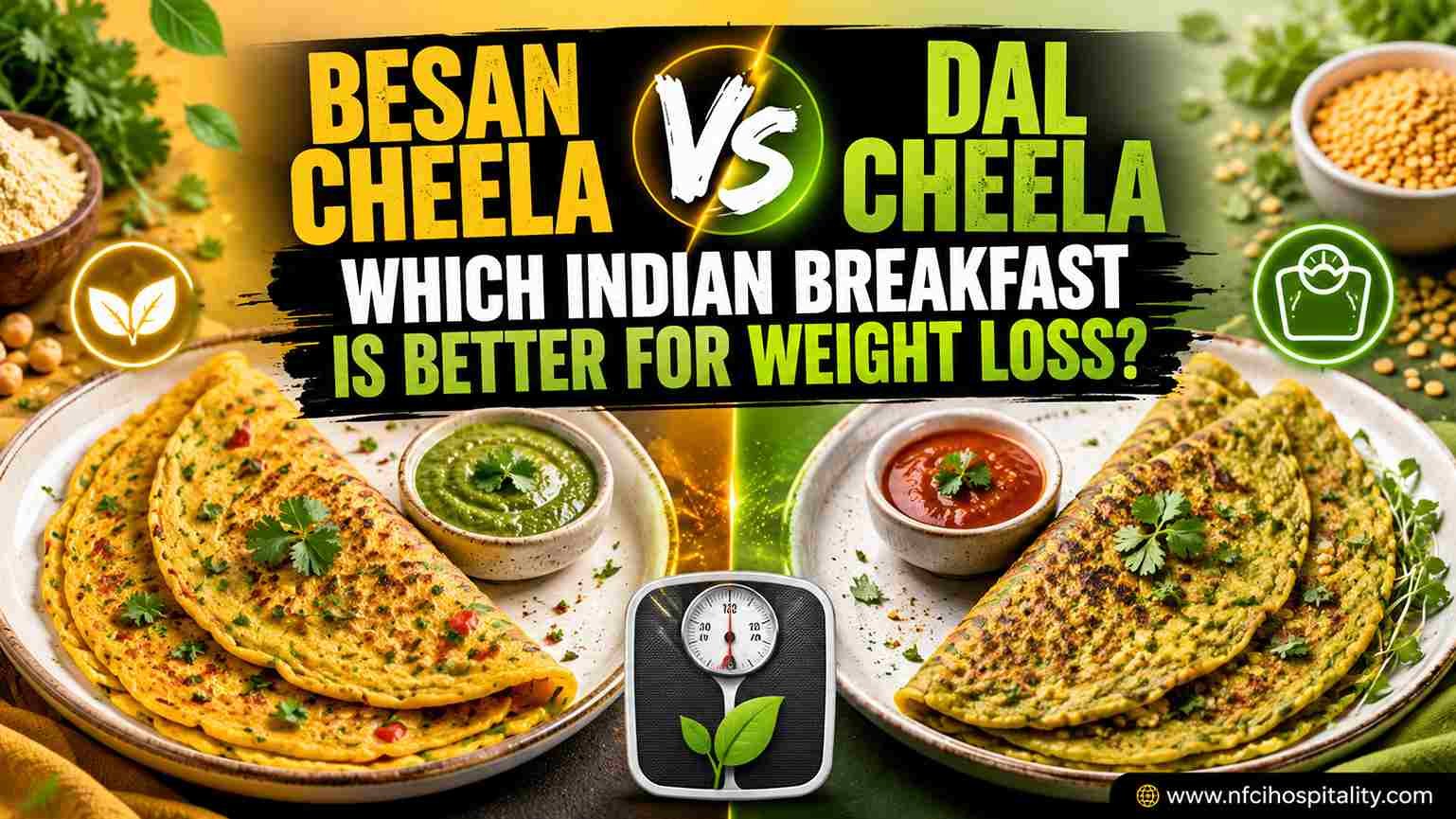
Besan Cheela vs Dal Cheela: Which Indian Breakfast Is Better for Weight Loss?
Losing weight doesn’t mean you have to eat boring salads, drink smoothies, or skip your favorite Indian foods.
Sometimes, the best and healthy Indian breakfast is already sitting in your kitchen.
Two popular options are besan cheela and dal cheela. Both are savory, satisfying, easy to customize, and can be prepared with vegetables and spices. But if you want to loose your weight, which one should you choose? Both can be part of a healthy meal, but their nutritional profile, preparation method, and the toppings you add can make a difference.
So, besan cheela vs dal cheela — which dish wins? Let’s find out.

What Makes a Good Breakfast for Weight Loss?
Before comparing the two, it’s important to understand what makes a breakfast suitable for weight management.
A good breakfast meal should ideally provide a combination of:
- Protein
- Fibre
- Vegetables or other nutrient-rich ingredients
- Moderate calories
- Enough volume to keep you satisfied
- Minimal added sugar and excessive oil
Protein can be particularly useful because research suggests that higher-protein meals can increase feelings of fullness and may support weight management when included as part of an appropriate calorie-controlled diet.
However, there is no single “weight-loss breakfast.” Overall calorie intake, dietary quality, physical activity and consistency matter much more than choosing one particular dish. The ICMR-National Institute of Nutrition also recommends moderation in calorie intake and regular physical activity rather than drastic weight-loss programmes.
What Is Besan Cheela?
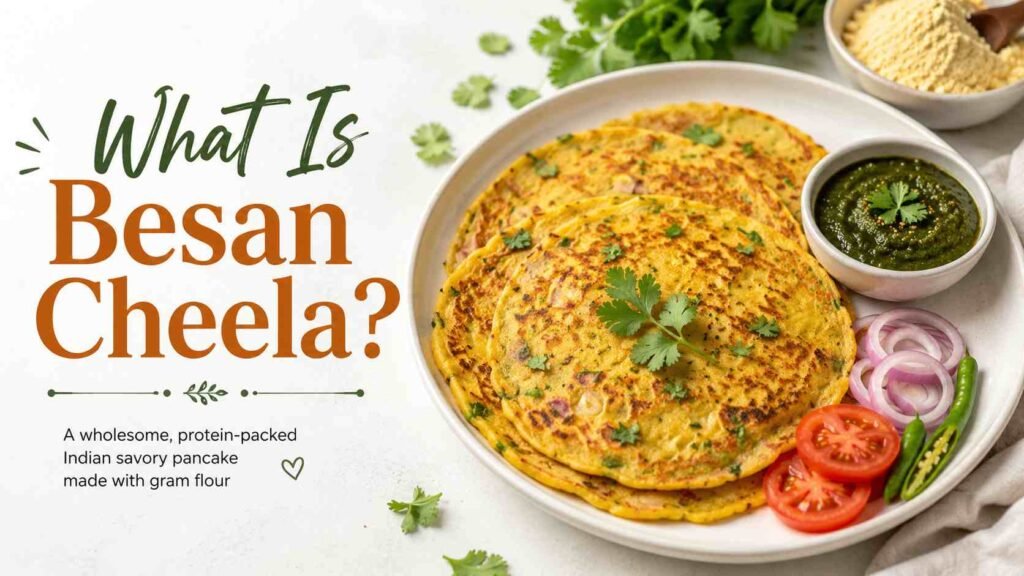
Besan cheela is a traditional Indian savoury pancake made using besan, or gram flour. It is usually mixed with ingredients such as onions, tomatoes, coriander, green chillies and spices before being cooked on a tawa.
Because it is quick to prepare and highly customisable, besan cheela can be a practical healthy meal for busy mornings.
Why Besan Cheela Can Be a Healthy Breakfast
Besan is made from chickpeas and provides plant-based protein and other nutrients. Adding vegetables can increase the overall nutritional value of the meal.
For a more weight-loss-friendly version:
- Add plenty of chopped vegetables.
- Use a limited amount of cooking oil.
- Pair it with unsweetened curd or a vegetable side.
- Avoid calorie-heavy toppings and excessive oil.
- Keep portion size appropriate for your individual calorie needs.
The result is a simple healthy dish that can be more satisfying than many highly refined breakfast options.
What Is Dal Cheela?
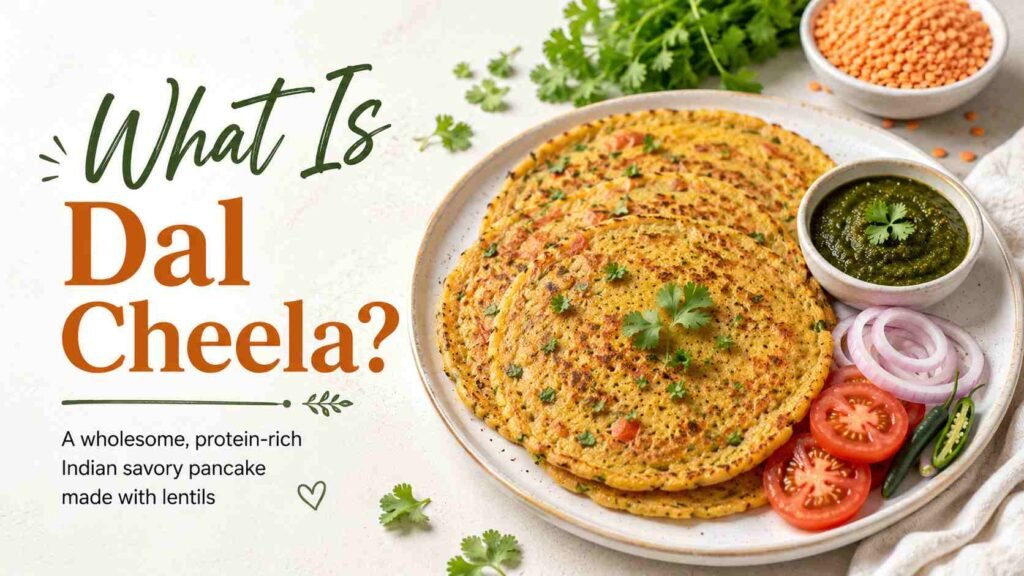
Dal cheela is another traditional Indian breakfast dish prepared by soaking dal, grinding it into a batter and cooking it like a savory pancake.
Moong dal is a popular choice, although other pulses can also be used.
Dal provides plant-based protein and is part of the pulses/legumes group. The ICMR-NIN’s dietary guidelines include pulses as an important component of a balanced Indian diet.
You can make dal cheela more nutritious by adding:
- Grated carrots
- Spinach
- Coriander
- Onion
- Tomato
- Capsicum
- Green chillies
- Spices
This makes dal cheela a nutrient-dense option for a filling Indian breakfast.
Besan Cheela vs Dal Cheela: Key Differences
So, how do the two compare?
| Feature | Besan Cheela | Dal Cheela |
|---|---|---|
| Main ingredient | Gram flour/besan | Soaked and ground dal |
| Protein | Good plant-based source | Good plant-based source |
| Fibre | Provides fibre | Provides fibre |
| Preparation | Quick batter preparation | Requires soaking and grinding |
| Vegetables | Easy to add | Easy to add |
| Weight-loss suitability | Yes, when prepared appropriately | Yes, when prepared appropriately |
| Best cooking method | Tawa with limited oil | Tawa with limited oil |
| Convenience | Very convenient | Requires more preparation |
There isn’t a universal winner. Both can fit into a weight-loss-friendly diet.
The better choice depends on your overall diet, portion size, ingredients and preparation method.
Which Is Better for Weight Loss: Besan Cheela or Dal Cheela?
The short answer: Both can be good choices.
If you are specifically comparing besan cheela vs dal cheela, don’t focus only on the name of the dish.
Focus on how it is prepared.
A large besan cheela cooked in a generous amount of oil and topped with calorie-dense ingredients may not be a particularly light meal.
Similarly, a dal cheela can become much more calorie-dense if it is cooked with excessive oil or served with high-calorie accompaniments.
For weight management, the most useful approach is to make either dish:
Protein-rich + vegetable-rich + moderately portioned + low in excessive oil.
Research generally suggests that higher-protein diets can provide modest benefits for body weight and fat loss compared with lower-protein diets, although protein alone does not guarantee weight loss.
5 Ways to Make Your Cheela More Weight-Loss Friendly

Whether you choose besan cheela or dal cheela, these simple changes can improve your breakfast.
1. Add More Vegetables
Don’t let your cheela be only flour or dal.
Add onion, tomato, spinach, grated carrot, capsicum or coriander. Vegetables add flavour, texture and nutrients without requiring heavy sauces or toppings.
2. Watch the Oil
This is one of the easiest ways to change the calorie content of a breakfast.
Use enough oil to cook the cheela properly, but avoid soaking it in oil.
3. Choose a Protein-Rich Side
Pair your cheela with plain curd or another suitable protein-rich accompaniment rather than sugary sauces.
4. Pay Attention to Portion Size
Even a nutritious food can contribute excess calories when eaten in very large portions.
Your overall daily energy intake matters for weight loss.
5. Avoid Turning a Healthy Breakfast Into a Heavy Meal
Cheela itself may be a nutritious choice, but excessive butter, oil, creamy dips, sugary chutneys or fried sides can significantly change the meal.
Can You Eat Besan Cheela Every Day for Weight Loss?
You can include besan cheela regularly if it suits your nutritional needs and overall eating pattern.
However, a healthy diet should offer variety.
Instead of eating the same breakfast every day, rotate different nutritious options such as:
- Besan cheela
- Dal cheela
- Vegetable poha
- Idli with sambar
- Vegetable upma
- Oats with savoury vegetables
- Dalia with vegetables
The ICMR-NIN dietary guidelines emphasise variety across food groups as part of a balanced eating pattern.
Is Dal Cheela Good for Weight Loss?
Yes, dal cheela can be a healthy breakfast for weight loss when prepared with sensible portions and limited oil.
Dal-based foods can contribute plant-based protein and fit well into a balanced Indian diet. The ICMR-NIN’s dietary guidance lists pulses as an important food group and provides them as a source of protein in its vegetarian “My Plate” framework.
For an even more filling breakfast, combine dal cheela with vegetables and a suitable protein-rich accompaniment.
Is Besan Cheela Good for Weight Loss?
Yes, Besan cheela can also be a good Indian breakfast for weight management.
Its biggest advantage is convenience. You can prepare a quick batter, add vegetables and cook it on a tawa with limited oil.
The key is not to think of besan cheela as a “magic weight-loss food.” No single breakfast dish automatically causes fat loss.
Instead, use it as one nutritious component of an overall balanced eating pattern.
Besan Cheela vs Dal Cheela: Which One Should You Choose?
Here’s a simple way to decide:
Choose besan cheela if:
- You want something quick and convenient.
- You prefer a smooth batter.
- You want an easy breakfast to customise with vegetables.
- You enjoy the nutty flavour of gram flour.
Choose dal cheela if:
- You enjoy pulse-based meals.
- You don’t mind soaking and grinding dal.
- You want another way to include pulses in your diet.
- You prefer a softer or more lentil-focused cheela.
Want the best of both? You can also experiment with a mixed batter using besan and dal, depending on your dietary preferences.
The Real Winner? A Balanced Breakfast
The answer isn’t simply one or the other.
Both can be excellent Indian breakfast choices when prepared with vegetables, adequate protein, controlled portions and limited oil.
Weight loss is influenced by your overall calorie intake, food quality, physical activity and long-term consistency. ICMR-NIN specifically recommends moderation in calorie intake and regular physical activity rather than drastic weight-loss approaches.
So the next time you’re planning breakfast, you don’t necessarily need to avoid Indian food. A thoughtfully prepared besan cheela or dal cheela can be a delicious, practical and healthy breakfast meal.
Final Thoughts
Besan cheela: Great for convenience and customization.
Dal cheela: Great for adding pulses to your breakfast.
For weight loss: Both can fit into a balanced diet.
The best choice is ultimately the one that you enjoy, prepare mindfully and can consistently include in a balanced eating pattern.
Learn More About Food, Nutrition & Culinary Skills with NFCI
Healthy food starts with understanding ingredients, cooking techniques and balanced meal preparation.
Join NFCI (National Finishing & Culinary Institute), and get get hands-on exposure to culinary skills and professional food preparation. NFCI provides practical learning designed to build industry-ready skills in the world of culinary arts and hospitality.
Admissions are OPEN!
Call 98880-11222 for FREE career guidance.
Visit www.nfcihospitality.com to explore the courses.

You may also like

HOW TECHNOLOGY AND AI ARE CHANGING THE HOSPITALITY INDUSTRY

10 TRADITIONAL DUSSEHRA RECIPES TO MAKE AT HOME