

Best Hotel Management Degree for Becoming an Executive Chef
- Dreaming of leading the kitchen in a five-star hotel?
- Want to lead a team in a fine dining restaurant?
- Want to become an Executive Chef?
Choose the right hotel management degree.
If you have just finished your 12th and are confused about which hotel management degree is the right choice to fulfill your ambition of becoming an Executive Chef, then this guide is for you.
It is important to keep in mind that not every degree prepares you equally to become an Executive Chef.
Who is an Executive Chef ?
An Executive Chef is also known as the Head Chef. He is the one who leads the professional kitchen in a hotel.
In today’s hospitality world, Executive Chefs play a strategic role in improving customer satisfaction, building a restaurant’s reputation, and contributing to the overall profitability of the business. This is why employers look for candidates with a strong hotel management degree, practical kitchen experience, leadership abilities, and industry-relevant skills.

Key Responsibilities of an Executive Chef
An Executive Chef is responsible for managing every aspect of a professional kitchen, including:
- Designing creative menus
- Supervising all kitchen operations
- Leading, training, and guiding kitchen staff
- Maintaining food quality, consistency, and presentation standards
- Managing food costs, budgeting, and stock
- Ensuring compliance with food safety and hygiene standards
- Introducing seasonal menus and innovative culinary concepts
- Checking kitchen efficiency and improving operational performance
- Handling customer feedback related to food quality and dining experience
Kitchen Hierarchy: Understanding the Chef Career Path
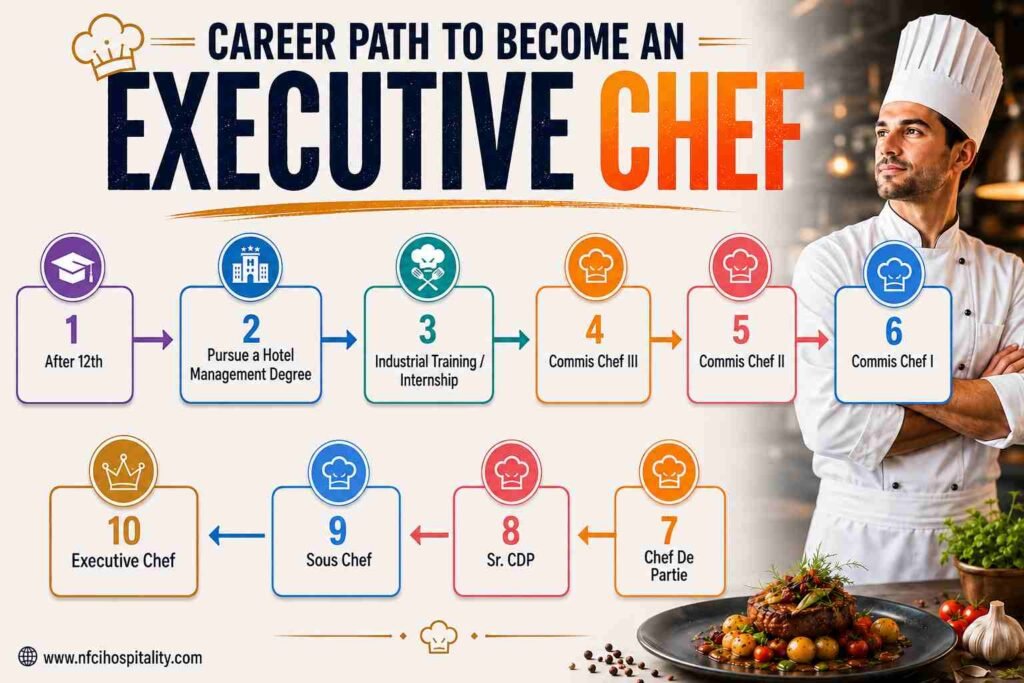
To become an Executive Chef, professionals gradually progress through different positions in the kitchen hierarchy, gaining technical expertise and leadership experience at every stage.
| Position | Primary Role |
|---|---|
| Commis Chef | Entry-level chef who assists senior chefs while learning fundamental cooking techniques and kitchen operations. |
| Demi Chef de Partie (DCDP) | Supports the Chef de Partie and manages specific tasks within a kitchen section. |
| Chef de Partie (CDP) | Oversees a dedicated kitchen station such as bakery, sauces, grill, or garde manger and ensures consistent food quality. |
| Sous Chef | Second-in-command of the kitchen who supervises daily operations, manages staff, and assists the Executive Chef. |
| Executive Chef | Leads the entire culinary department, manages kitchen operations, develops menus, controls costs, and drives the restaurant’s culinary vision. |
Skills Every Executive Chef Should Develop
Becoming an Executive Chef needs much more than excellent cooking skills.
- Advanced culinary techniques and food production expertise
- Strong leadership and team management skills
- Menu planning and recipe development
- Food costing and budget management
- Inventory management
- Knowledge of food safety and hygiene standards
- Time management and problem-solving abilities
- Creativity and innovation in menu design
- Communication and interpersonal skills
- Decision-making ability under pressure
Why Choosing the Right Hotel Management Degree Matters?
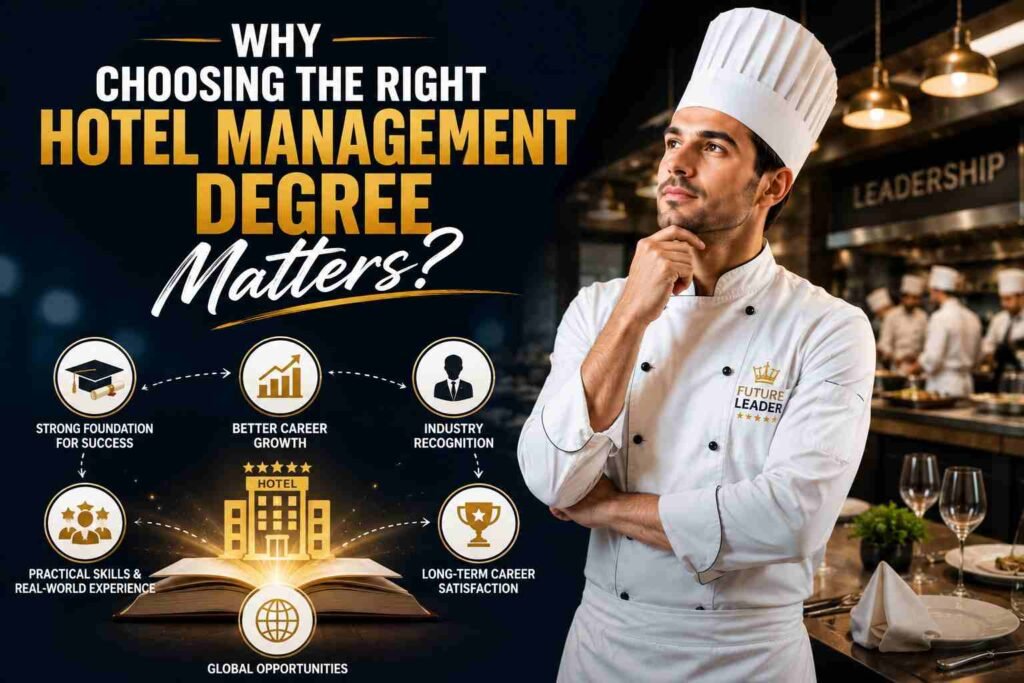
If you want to become an Executive Chef, you need the right hotel management degree, and that depends on the quality of education you receive, as it plays an important role in shaping your technical expertise, leadership abilities, and overall career growth.
A well-structured hotel management degree equips students with much more than cooking techniques. It provides a balanced combination of practical learning, industry exposure, managerial knowledge, and real-world experience that prepares them to excel in professional kitchens and eventually take on leadership roles.
- Practical Training Builds Real Culinary Skills
- Industrial Exposure Bridges the Gap Between Classroom and Industry
- Hotel Internships Provide Valuable Real-World Experience
- Kitchen Management Skills Prepare You for Leadership
- Restaurant Operations Develop Business Understanding
- Food Science Improves Culinary Excellence
- Leadership Skills Turn Great Chefs into Great Managers
- Communication is Essential in Every Professional Kitchen
- Business Knowledge Creates Future Culinary Leaders
Why B.Voc (Bachelor of Vocational Skills) in Hospitality and Tourism Management is an Excellent Choice for Future Executive Chefs?
Among the various options available, B.Voc in Hospitality & Tourism Management stands out for its strong focus on practical learning and industry readiness.
During this program, students gain experience in food production, restaurant operations, kitchen management, hospitality services, communication, leadership, and entrepreneurship skills that are essential for becoming an Executive Chef.
At NFCI (National Finishing and Cookery Institute), students pursuing the B.Voc in Hospitality & Tourism Management receive practical exposure through modern training kitchens, industrial visits, workshops, internships, and guidance from experienced hospitality professionals. This approach helps students build the technical, managerial, and leadership skills needed for a successful hospitality career.
Career Path to Become an Executive Chef
Here is a Career Path:
How Long Does It Take to Become an Executive Chef?
To become an executive chef requires patience, practical experience, and consistent growth.
Typical career timeline looks like this:
- Hotel Management Degree: 3 years
- Industrial Training/Internship: Around 12 months
- Professional Experience: 1-7 years (depending on small or large scale organizations)
The exact timeline may vary based on your skills, workplace, specialization, and career progression. Chefs who continuously upgrade their skills and gain leadership experience often advance more quickly.
Executive Chef Salary in India
The salary of an Executive Chef depends on factors such as experience, employer, location, and specialization. Professionals working in luxury hotels, cruise lines, and international hospitality brands generally earn higher salaries.
| Position | Average Monthly Salary |
|---|---|
| Commis Chef | ₹15,000 – ₹30,000 |
| Chef de Partie (CDP) | ₹35,000 – ₹60,000 |
| Sous Chef | ₹60,000 – ₹1,20,000 |
| Executive Chef | ₹1,00,000 – ₹3,00,000+ |
Note: Salaries are approximate and may vary depending on the organization, city, experience, skills, and specialization.
Industries That Hire Executive Chefs
- Five-star Hotels
- Luxury Resorts
- Restaurants & Fine Dining
- Cruise Lines
- Airlines
- Cloud Kitchens
- Catering Companies
- Corporate Cafeterias
- Hospitals
- Educational Institutions
- Hospitality Consulting Firms
- Food Startups & Restaurant Chains
These industries offer diverse career opportunities both in India and abroad.
Can You Become an Executive Chef Abroad?
Yes, a highly-skilled Executive Chef can build a successful career in abroad. Countries like Canada, Australia, the UAE (Dubai), Singapore, and several European countries have a growing demand for qualified hospitality professionals.
To work abroad, employers generally look for:
- A recognized hotel management degree
- Strong culinary and kitchen management skills
- Relevant work experience
- Good English communication skills
- Industry certifications (if required)
- A willingness to adapt to international food standards and work cultures
Many professionals also find opportunities with cruise lines, luxury hotel chains, international restaurants, and global hospitality brands, where they can gain valuable experience and competitive salaries.
How to Choose the Best Hotel Management Degree?
Selecting the right hotel management degree can significantly influence your career growth. Before enrolling, consider the following factors:
- Industry-relevant curriculum
- Practical kitchen and restaurant training
- Internship opportunities
- Experienced faculty with industry expertise
- Modern training kitchens and infrastructure
- Leadership and soft skills development
- Updated curriculum aligned with current industry trends
- 100% placement assistance and industry connections
- International exposure through workshops or industrial visits
Choosing a program that balances theory with practical learning will prepare you for long-term success in the hospitality industry.
Why Students Choose NFCI’s B.Voc in Hospitality & Tourism Management?
Students looking for a career-focused hotel management degree can choose NFCI’s B.Voc in Hospitality & Tourism Management.
The program offers:
- Industry-aligned curriculum
- Hands-on practicaol training
- Modern training kitchens and restaurant simulations
- Industrial training and internships
- Guidance from experienced hospitality professionals
- Skill development in food production, hospitality management, and tourism
- Entrepreneurship and business-focused learning
- Leadership and communication development
- Placement support to help students begin their hospitality careers
With its strong focus on practical learning and industry exposure, the program provides the knowledge and skills required to pursue careers in hotels, restaurants, resorts, cruise lines, and other hospitality sectors.
Final Thoughts
Becoming an Executive Chef requires passion, dedication, continuous learning, and the right educational foundation. Choosing a hotel management degree that combines practical training, industry exposure, and leadership development can significantly improve your career prospects.
If your goal is to lead professional kitchens, create exceptional dining experiences, and build a rewarding career in the hospitality industry, investing in a skill-oriented program such as B.Voc in Hospitality & Tourism Management can be an excellent first step toward achieving your dream.
Admissions are open at NFCI!
Seats are filling very fast.
Apply today or call at 98880-11222 for a FREE career guidance.
Visit www.nfcihospitality.com to explore our programs.
Frequently Asked Questions (FAQs)
1. Which hotel management degree is best after 12th?
A skill-based degree like B.Voc in Hospitality & Tourism Management is an excellent option for students seeking practical learning and industry-focused education.
3.Can B.Voc students become an Executive Chef?
Yes, B.Voc (Bachelor of Vocational Skills) students can become an Executive Chef through practical training, internships, and professional experience. They can progress through various chef positions and eventually become an Executive Chef.
4. How long does it take to become an Executive Chef?
Typically, it takes around 8–15 years, including your degree, internship, and professional experience.
6. Can I work abroad after completing a hotel management degree?
Yes, after completing a hotel management degree, you will have opportunities to work in hotels, resorts, cruise lines, restaurants, and international hospitality brands across various countries.
7. Is Executive Chef a good career?
Yes, it offers excellent career growth, leadership opportunities, creative satisfaction, and competitive salaries in India and abroad.
Tag:Best hotel management degree for becoming an executive chef in india, bvoc after 12th, bvoc degree after 12th, dem, executive chef salary, Hotel Management Chef Salary, Hotel management course, hotel management degree, hotel management degree after 12th, how to become an executive chef, nfci hotel management courses, sous chef

You may also like

HOW IS AN NFCI FRANCHISE A PROFITABLE BUSINESS OPPORTUNITY IN INDIA?

THINGS TO CHECK BEFORE JOINING A HOTEL MANAGEMENT INSTITUTE