

5 Types of Tandoor Sticks: How to Choose the Right Skewers
Tandoor sticks are small kitchen tool that plays an important role, commonly known as tandoor roads, tandoor seekh, or tandoor skewers. There are various types of tandoor sticks helps hold food securely inside the intense heat of a tandoor. You just need to identify the right skewer according to your dish. Because not every tandoor stick is suitable for every dish. For example, a skewer that works perfectly for Seekh kebabs may not be the right choice for paneer tikka or vegetables.
To manage a professional kitchen, it is important to understand how a tandoor chef gets that perfect finish. In this guide, we will learn to choose the right tandoor sticks for different cooking needs.
What Are Tandoor Sticks?
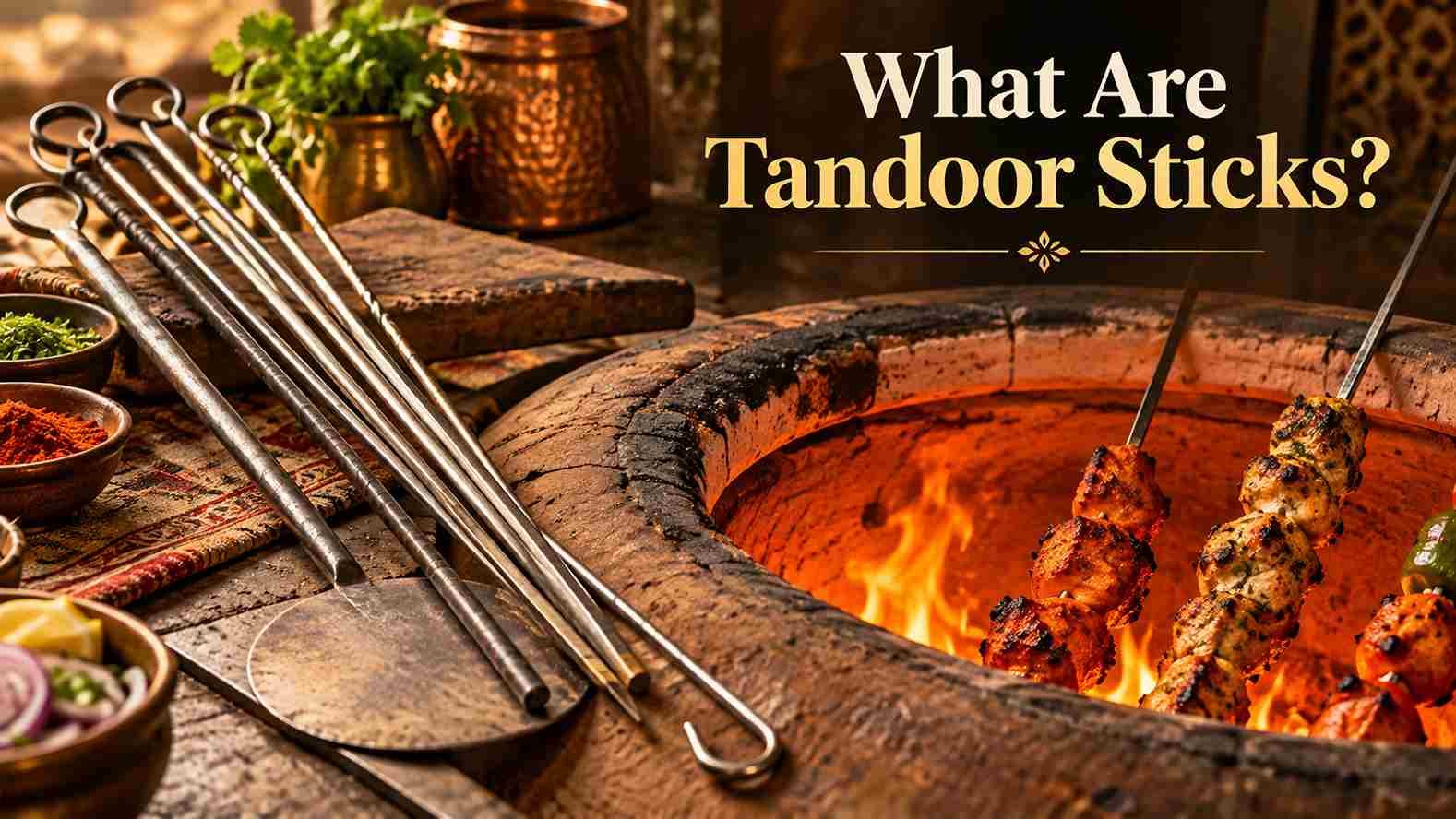
Tandoor sticks are also known as tandoor skewers or tandoor seekhs. This long metal cooking tools are used to hold and position food inside a tandoor.
Its not like a regular grill where you’d normally just toss some food onto a grate. A tandoor is very different, it uses intense heat coming from all around in a tall, vertical space. You can put your food on a skewer then stick it in the hot cooking space, let it cook and really bring out that smoky, roasted and charred flavor that you get from a proper tandoori dish.
Depending on their design, tandoor sticks can be round, square, flat or specially shaped for particular dishes.
They are commonly used for dishes such as:
- Chicken tikka
- Paneer tikka
- Seekh kebab
- Boti kebab
- Tandoori vegetables
- Fish and seafood
- Kofta and minced-meat preparations
- Other grilled and skewered foods
Choosing the right tandoor stick is not simply about buying the longest or thickest rod available. The tandoor sticks need to match the food, cooking method and tandoor setup.
Why Do Tandoor Sticks Matter So Much?
Imagine putting delicate paneer on an extremely heavy skewer or trying to hold a soft Seekh mixture on a thin, round rod.
The result may not be what you expect.
The right tandoor sticks help with:
1. Better Food Stability
A properly shaped tandoor sticks helps keep food securely in place while it cooks. This becomes particularly important for minced preparations such as Seekh kebabs, which need adequate support to remain attached to the skewer.
2. More Even Cooking
Food needs to be exposed to the tandoor’s heat properly. Choosing a suitable skewer size and arrangement can help the food cook more consistently.
3. Easier Turning
A good skewer should allow the chef to handle and turn the food without causing it to slide, spin or break apart.
4. Better Charring
s the heat to reach different sides and helps develop the colour and texture that diners expect.
5. Safer Kitchen Handling
Professional tandoor kitchens deal with extremely high temperatures. Strong, properly designed tandoor rods are easier to handle than unsuitable or flimsy alternatives.
Types of Tandoor Sticks: Which One Should You Use?
There is no single “best” tandoor sticks for every dish. The right choice depends on the food being cooked.
Let’s break down the main types.
1. Round Tandoor Sticks
Round tandoor skewers are useful for threading individual pieces of food such as vegetables, paneer, fish and other relatively small ingredients.
They are simple to load and can work well when the food is naturally held securely by the skewer.
Best suited for:
- Paneer
- Vegetables
- Fish
- Prawns and seafood
- Smaller pieces of meat
However, round rods may allow some foods to rotate around the skewer. That is why they are not always the first choice for preparations that need a firm grip.
2. Square or Flat Tandoor Sticks
Square and flat tandoor skewers provide more surface area and grip than a simple round rod.
This makes them particularly useful for foods that need to remain firmly attached while the skewer is rotated.
They are commonly associated with preparations such as Seekh kebab and other minced-meat dishes. Square profiles can help prevent the food from spinning freely around the rod.
Best suited for:
- Seekh kebab
- Kofta
- Minced-meat preparations
- Heavier kebabs
- Foods that need additional grip
For a tandoor chef, this difference can make handling much easier.
3. Thin Tandoor Sticks
Thin skewers generally heat up quickly and are more suitable for smaller or delicate ingredients.
Depending on the specific skewer design, sizes around 3–5 mm are commonly used for foods such as vegetables and seafood.
Best suited for:
- Small vegetables
- Mushrooms
- Seafood
- Smaller food portions
- Delicate ingredients
The key is not to overload a thin rod with heavy food.
4. Medium-Thickness Tandoor Rods
Medium-sized rods offer a balance between strength and handling.
They can be useful for foods such as chicken tikka and other moderately sized kebabs. Skewers in approximately the 6–8 mm range are commonly discussed for chicken and heavier meat preparations.
Best suited for:
- Chicken tikka
- Chicken kebabs
- Lamb kebabs
- Larger paneer portions
- Other moderately heavy preparations
5. Heavy-Duty Tandoor Sticks
For heavier preparations, the skewer needs sufficient strength to carry the load without bending or becoming difficult to handle.
Heavy-duty skewers are particularly useful in professional kitchens where larger portions and frequent service place greater demands on kitchen equipment.
The exact thickness should be selected according to the dish, food weight and tandoor design rather than simply choosing the thickest rod available.
Tandoor Sticks by Food: A Quick Guide
Food | Suitable Tandoor Stick | Why |
Chicken Tikka | Medium square/flat skewer | Helps hold pieces securely |
Seekh Kebab | Square/flat tandoor Seekh | Better grip for minced mixtures |
Paneer Tikka | Round or suitable flat skewer | Easy threading and handling |
Vegetables | Thin/medium round skewer | Suitable for smaller pieces |
Fish | Thin/medium suitable skewer | Supports delicate pieces |
| Kofta | Square/flat skewer | Helps reduce unwanted movement |
| Large Meat Pieces | Stronger/heavier skewer | Provides additional support |
What Material Is Best for Tandoor Sticks?
Material matters just as much as shape.
Stainless Steel Tandoor Sticks
Stainless steel is widely used for professional tandoor skewers because it is durable, reusable, relatively easy to clean and designed to withstand repeated high-temperature cooking.
For a busy kitchen, reusable metal skewers are also much more practical than disposable alternatives.
Benefits include:
- Durable construction
- Reusable design
- Resistance to corrosion
- Easy cleaning
- Suitable for high-temperature cooking
- Practical for professional kitchen use
When purchasing tandoor rods, look for food-contact-safe materials and construction appropriate for the intended cooking environment.
What About Bamboo Skewers?
Bamboo skewers might just work for some grilling jobs, but they’re not close enough to act as a straight swap for proper metal tandoor skewers in a proper high-temperature tandoor.
A real tandoor operates at temperatures that can be far beyond the safe operating range of many disposable wooden or bamboo products. For professional tandoor cooking, purpose-built metal skewers are generally the more appropriate option.
How to Choose the Right Tandoor Sticks for Your Kitchen?
Buying tandoor skewers becomes much easier when you look at a few important factors.
1. Consider What You Cook Most
Your menu should decide your skewer collection.
If your kitchen is all about serving up chicken tikka, paneer tikka and lots of veggies you’re probably going to need some different skewers than a restaurant that does a lot of heavier meat dishes like Seekh kebabs.
2. Check the Shape
Ask yourself:
Does the food need to stay fixed or should it be easy to thread and turn?
Round rods can work well for many cubed and threaded foods, while square or flat designs provide additional grip for preparations that tend to rotate or fall apart.
3. Check the Thickness
Thin rods can be useful for smaller, delicate ingredients, while thicker rods offer more support for heavier foods.
Don’t assume that thicker automatically means better.
A skewer that is unnecessarily heavy for a delicate ingredient can make handling more difficult.
4. Measure the Length
Length is another important factor.
The skewer should be long enough to hold the intended portion while allowing the chef to position and remove it safely from the tandoor.
A commercial kitchen should also ensure that the skewer length is compatible with the specific tandoor being used.
5. Look at the Handle and Grip
A tandoor chef frequently works close to intense heat.
A practical design should make the skewer easy to grip, position, rotate and remove. Depending on the design, some professional skewers may include handles or features that make handling easier.
6. Think About Cleaning
Tandoor sticks come into direct contact with marinades, meat, dairy products, vegetables and spices.
Choose reusable skewers that can be cleaned thoroughly after every use.
A clean skewer is not just about appearance. It is an important part of maintaining good kitchen hygiene.
Tandoor Seekh Vs Tandoor Skewers: Are They the Same?
You may hear terms such as tandoor Seekh, tandoor sticks, tandoor rods and tandoor skewers used interchangeably.
They all refer broadly to tools used to hold food during tandoor cooking, but their design can differ depending on the food they are intended to hold.
For example, a flat or square Seekh is particularly useful for minced-meat preparations because its shape can help the mixture stay attached during cooking.
So, when buying equipment for a professional kitchen, don’t focus only on the name.
Look at the shape, thickness, length, material and intended use.
Common Mistakes People Make When Choosing Tandoor Sticks
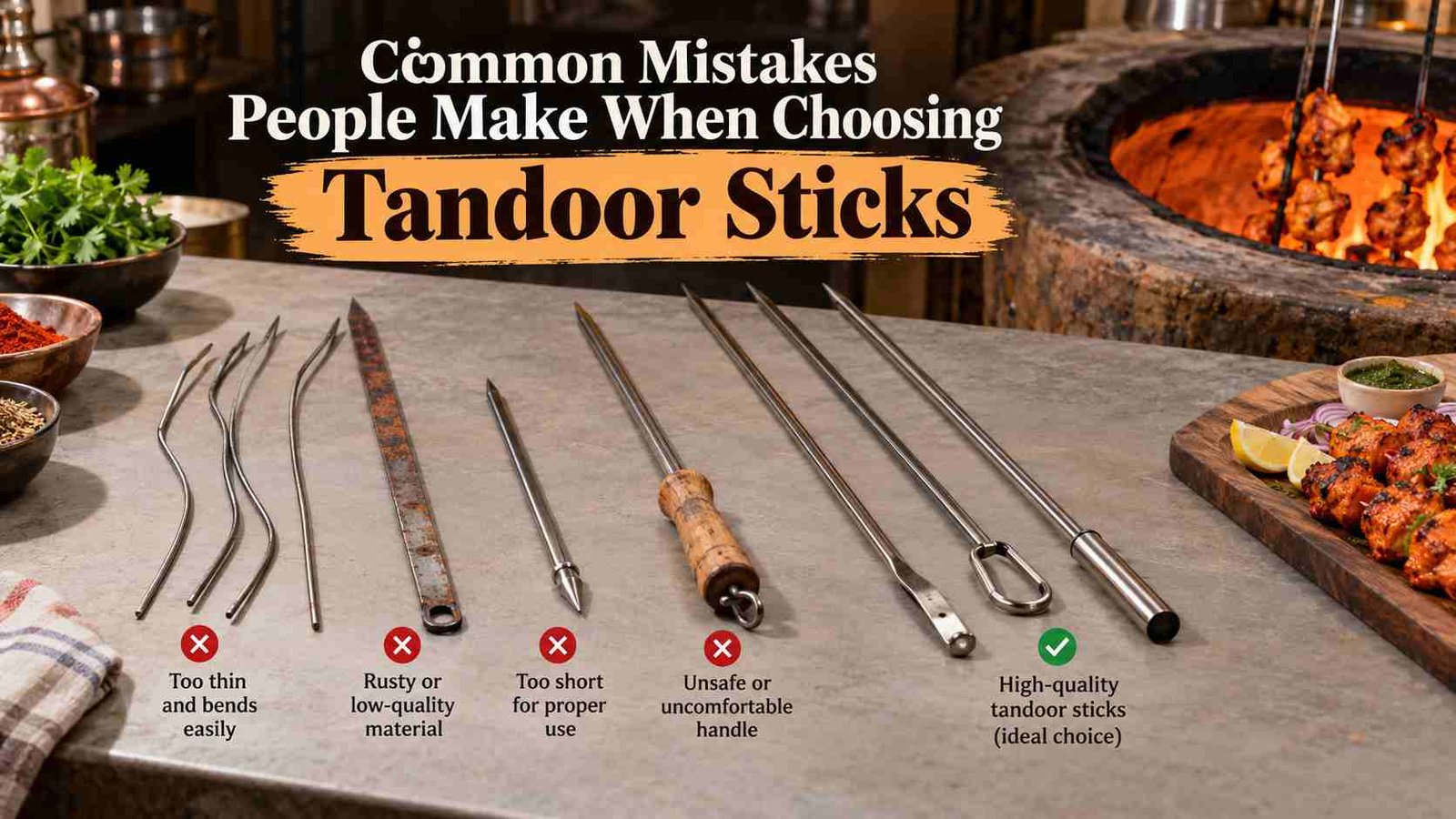
Choosing the wrong skewer can create unnecessary problems in a busy kitchen.
Here are some common mistakes to avoid:
Choosing One Skewer for Everything
Different foods have different requirements. A single universal skewer may not give you the best results across your entire menu.
Ignoring the Shape
The difference between a round and square skewer can affect how food behaves while turning.
Overloading the Rod
Putting too much food on a skewer can make it difficult to handle and may affect cooking consistency.
Using the Wrong Length
A skewer that is too short or too long for your tandoor setup can make loading and removal unnecessarily difficult.
Buying Only Based on Price
A cheaper skewer may not necessarily offer the durability or design required for frequent professional use.
For a commercial kitchen, think about durability, usability, food compatibility and cleaning rather than price alone.
How Should You Maintain Tandoor Sticks?
Even high-quality tandoor rods need proper care.
After cooking:
- Allow the skewers to cool enough for safe handling.
- Remove food residue.
- Wash them thoroughly using appropriate kitchen cleaning methods.
- Rinse properly.
- Dry them completely before storage.
- Inspect regularly for bending, damage, corrosion or other defects.
- Replace damaged or unsuitable skewers rather than continuing to use them.
Regular cleaning is especially important because marinades, oil, spices and food particles can build up over repeated use.
Tips From a Tandoor Kitchen: How to Get Better Results
Choosing the right tandoor sticks is only one part of the process. A few basic practices can make tandoor cooking more consistent.
1. Preheat Properly
A properly heated tandoor is essential for achieving the desired cooking environment.
2. Don’t Overcrowd the Skewer
Leave appropriate space between pieces where the dish requires it so heat can reach the food effectively.
3. Match the Skewer to the Food
Use the shape and thickness that suits the ingredients rather than automatically reaching for the same rod every time.
4. Turn When Needed
Rotating the skewer at the appropriate stage helps expose different sides of the food to heat and develop more even color.
5. Handle With Care
Tandoor cooking involves extremely high temperatures. Proper tools, heat-resistant protection and safe handling practices are essential in a professional kitchen.
Why Tandoor Skills Matter for Aspiring Chefs?
Tandoor sticks and tandoor rods may look similar, but knowing how they differ can help you make better choices in the kitchen.
A tandoor chef needs to understand:
- How heat behaves inside a tandoor
- Which ingredients require different cooking methods
- How marinades affect cooking
- How to position food correctly
- How to select suitable tools
- How to manage timing and temperature
- How to maintain kitchen hygiene and safety
- How to consistently reproduce the same result during service
These are the kinds of practical decisions that turn cooking knowledge into professional kitchen skills.
Develop Culinary Skills with NFCI
Are you preparing juicy chicken tikka, smoky paneer, perfectly shaped Seekh kebabs or roasted vegetables? The right equipment can transform your culinary experience into something fruitful. It brings creativity and excellence into your work.
Understanding kitchen tools is just a beginning. If you are planning to enter the culinary industry, remember that building a successful career takes commitment, countless hours of practice, practical industry exposure, and mentorship from experienced professionals.
Join NFCI (National Finishing and Cookery Institute)
NFCI has been nurturing culinary and hospitality talent since 1990. Empowering thousands of aspiring professionals to pursue rewarding careers across India and abroad.
NFCI’s hotel management courses open doors to multiple career options, from working with top hotels to exploring entrepreneurship and building a food business of your own.
NFCI offers:
- Real-World Industry Exposure
- Immersive Practical Training
- Expert-Led Guest Lectures
- Part-Time Work Opportunities
- 100% Placement Assistance
- Professional Career Mentorship
Admissions are OPEN!
Visit our website: www.nfcihospitality.com to explore our programs.
Call 98880-11222 for FREE career guidance.
FAQs About Tandoor Sticks
What are tandoor sticks used for ?
Tandoor sticks are used to keep your kebabs, tikka, paneer and the like hung out to dry in the tandoor while they get cooked to perfection.
What is the difference between tandoor rods and tandoor skewers ?
Usually the main difference between the two lies in the way the rod is shaped, how thick it is, how long it is, and what kind of food you’d typically put on it.
Which tandoor stick is best for Seekh kebab ?
For minced-meat kebabs like Seekh, people usually swear by square or flat tandoor skewers.
Are stainless steel tandoor skewers good for professional kitchens ?
Stainless steel is all the rage when it comes to tandoor skewers in professional kitchens – it’s tough, a breeze to clean and can take the heat as long as you need it to.
How do I choose the right tandoor rods ?
When it comes to choosing the right tandoor rods, I reckon you should take the following into account – food type, what shape skewer you need, how thick it should be, how long it should be, and what its made of. And don’t forget to think about the size of your tandoor and how your kitchen runs – that’s bound to make all the difference.

You may also like

HOW TECHNOLOGY AND AI ARE CHANGING THE HOSPITALITY INDUSTRY

10 TRADITIONAL DUSSEHRA RECIPES TO MAKE AT HOME