


Domestic Biogas Plant Setup for Indian Hotels
Today, installing a biogas plant is one of the smartest decisions, whether it’s the kitchen of a hotel, hostel, restaurant, or a cooking institute in India. Those who work in the hospitality sector are well aware that there is a huge amount of kitchen waste generated every day. Instead of throwing vegetable peels, fruit scraps, or leftover food waste into dustbins, it is better to convert that waste into clean cooking fuel for the kitchen. Shocked? But this is how a biogas plant works. This is a perfect waste-management solution. It reduces waste disposal problems and produces fuel that can be used directly in a biogas stove for cooking.
In this guide, we will explore how a bio gas plant works, why hotels should consider installing one, and how it can turn kitchen waste into valuable energy.
What is a Biogas Plant?
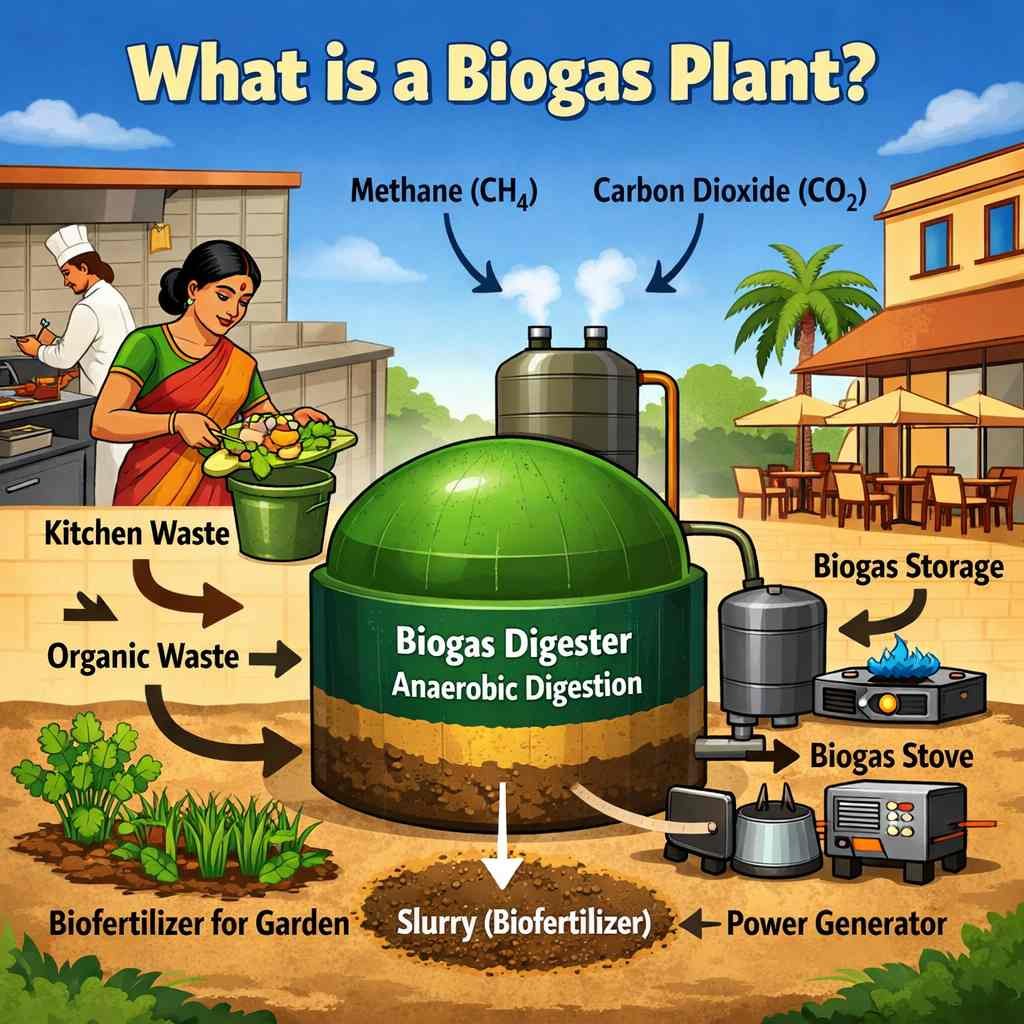
A biogas plant is a facility that converts organic waste into biogas through a natural biological process called anaerobic digestion.
In simple terms, microorganisms break down organic waste in an oxygen-free environment and produce a gas mixture mainly made of: Methane (CH₄), Carbon dioxide (CO₂) and small traces of other gases.
This gas is collected and can be used for cooking in a biogas stove, heating, or even electricity generation in larger systems.
For hotels, it is very beneficial, as daily kitchen waste becomes a source of fuel instead of garbage.
Why Indian Hotels Should Install a Biogas Plant?

As already mentioned, Indian hotels and commercial kitchens generate large amount of biodegradable waste every day. To solve this problem, installing a biogas plant offers multiple advantages:
1. Converts kitchen waste into fuel
Vegetable peels, leftover food, and organic waste are perfect raw materials for biogas production. Instead of throwing them into bins, hotels can use a smart system and convert it into hotel gas.
2. Reduces LPG Consumption
Hotel industry rely heavily on LPG gas cylinders. By installing a bio gas plant, a portion of this fuel requirement can be replaced with biogas, reducing operational costs.
3. Eco-Friendly Waste Management
Improper disposal of food waste leads to environmental issues. A biogas plant for home or hotels helps reduce landfill waste and greenhouse gas emissions.
4. Produces Organic Fertilizer
After biogas production, the leftover slurry is a nutrient-rich organic fertilizer. Hotels with gardens or landscaping can use it for plants.
5. Supports Sustainable Hospitality
Modern travelers increasingly prefer eco-friendly hotels. Installing a biogas plant reflects a hotel’s commitment to sustainability and responsible waste management.
How Biogas Production Works?
Understanding the process of biogas production helps hotels manage their waste more efficiently.
The process generally involves the following steps:
1. Waste Collection
Organic waste from the kitchen such as vegetable peels, leftover food, fruit waste, and other biodegradable materials is collected.
2. Waste Feeding
The waste is mixed with water and fed into the biogas plant through an inlet chamber.
3. Anaerobic Digestion
Inside the digester tank, microorganisms break down the organic waste in the absence of oxygen.
4. Gas Formation
During this process, methane-rich biogas is produced and stored in the gas chamber.
5. Gas Utilization
The gas is supplied directly to a biogas stove in the kitchen for cooking.
6. Slurry Output
The remaining slurry exits the plant and can be used as organic fertilizer.
Types of Biogas Plants Suitable for Hotels
Different types of biogas plant models are available in India depending on the scale of waste generation.
1. Fixed Dome Biogas Plant
This traditional design is widely used in rural areas. It has a fixed dome structure where gas collects at the top of the chamber.
Best for: Medium-scale hotels and institutional kitchens.
2. Floating Drum Biogas Plant
This type has a movable gas holder that floats on the slurry.
Advantages:
- Easy gas monitoring
- Simple operation
3. Prefabricated Biogas Plant
These modern systems are compact and easy to install.
Ideal for:
- Urban hotels
- Hostels
- Restaurants
These systems are often recommended for biogas plant for home or small commercial kitchens.
Key Components of a Bio Gas Plant
A standard bio gas plant consists of several essential components:
- Inlet tank: where waste is fed into the system.
- Digester chamber: the main tank where decomposition occurs.
- Gas holder: stores the produced biogas.
- Outlet chamber: releases the digested slurry.
- Gas pipeline: transfers gas to the biogas stove.
Each component plays an important role in ensuring smooth biogas production.
Space Required for a Biogas Plant in Hotels
One common concern hotel owners have is space.

Fortunately, modern biogas plant for home and small commercial models are compact and can be installed in:
- Backyards
- Utility areas
- Waste management zones
- Kitchen service areas
A small hotel producing 15–25 kg of food waste daily can easily install a compact bio gas plant without needing large space.
Estimated Waste Requirement for Biogas Production
Here is a general idea of waste input vs gas output:
|
Kitchen Waste |
Biogas Produced |
|
10 kg organic waste |
~0.8–1 m³ biogas |
|
25 kg organic waste |
~2–2.5 m³ biogas |
| 50 kg organic waste |
~4–5 m³ biogas |
This amount of gas can run a biogas stove for several hours daily.
Government Support for Biogas Plants in India
The Indian government actively promotes renewable energy systems like biogas plants.
Programs from agencies like:
- Ministry of New and Renewable Energy (MNRE)
- State renewable energy boards
often offer:
- Subsidies
- Technical assistance
- Awareness programs
These initiatives encourage hotels, restaurants, and institutions to adopt these technologies.
Challenges in Installing a Biogas Plant in Hotels
Although the benefits are significant, some challenges should also be considered.
1. Waste Segregation
Organic and non-organic waste must be separated properly to maintain efficient biogas production.
2. Regular Maintenance
Like any system, a bio gas plant requires periodic monitoring and maintenance.
3. Initial Setup Cost
The installation cost can vary depending on plant capacity.
However, the long-term savings on fuel and waste disposal often make it a worthwhile investment.
The Future of Biogas in the Indian Hospitality Industry
With increasing environmental awareness and stricter waste management rules, biogas plants are likely to become an essential part of modern hotel kitchens.
Hotels that adopt biogas production systems today will not only reduce operational costs but also contribute to a cleaner and greener environment.
Turning kitchen waste into energy is no longer just an innovative idea—it’s becoming a necessity for sustainable hospitality.
Build Sustainable Kitchen Skills with NFCI!
Understanding sustainable kitchen practices like waste management, fuel efficiency, and modern cooking systems is becoming increasingly important in the hospitality industry.
NFCI (National Finishing and Cookery Institute) is a top hotel management and culinary institute of India, offers:
- Hands-on training in kitchens
- Expert guidance
- Industry-relevant exposure
- 100% placement assistance
- Internship opportunities
- U-shaped classrooms
- Pan-India presence with 21+ campuses
With 36+ years of excellence in culinary arts and hospitality education, NFCI offer practical culinary skills along with real-world kitchen operations used in hotels. This professional institute prepares students to become job-ready from day one.
Admissions are open! But seats are filling up fast.
Visit www.nfcihospitality.com to explore our programs.
Contact us at 98880-11222 for a free counselling session.

You may also like

HOW TO CHOOSE THE BEST CULINARY INSTITUTE IN INDIA?