

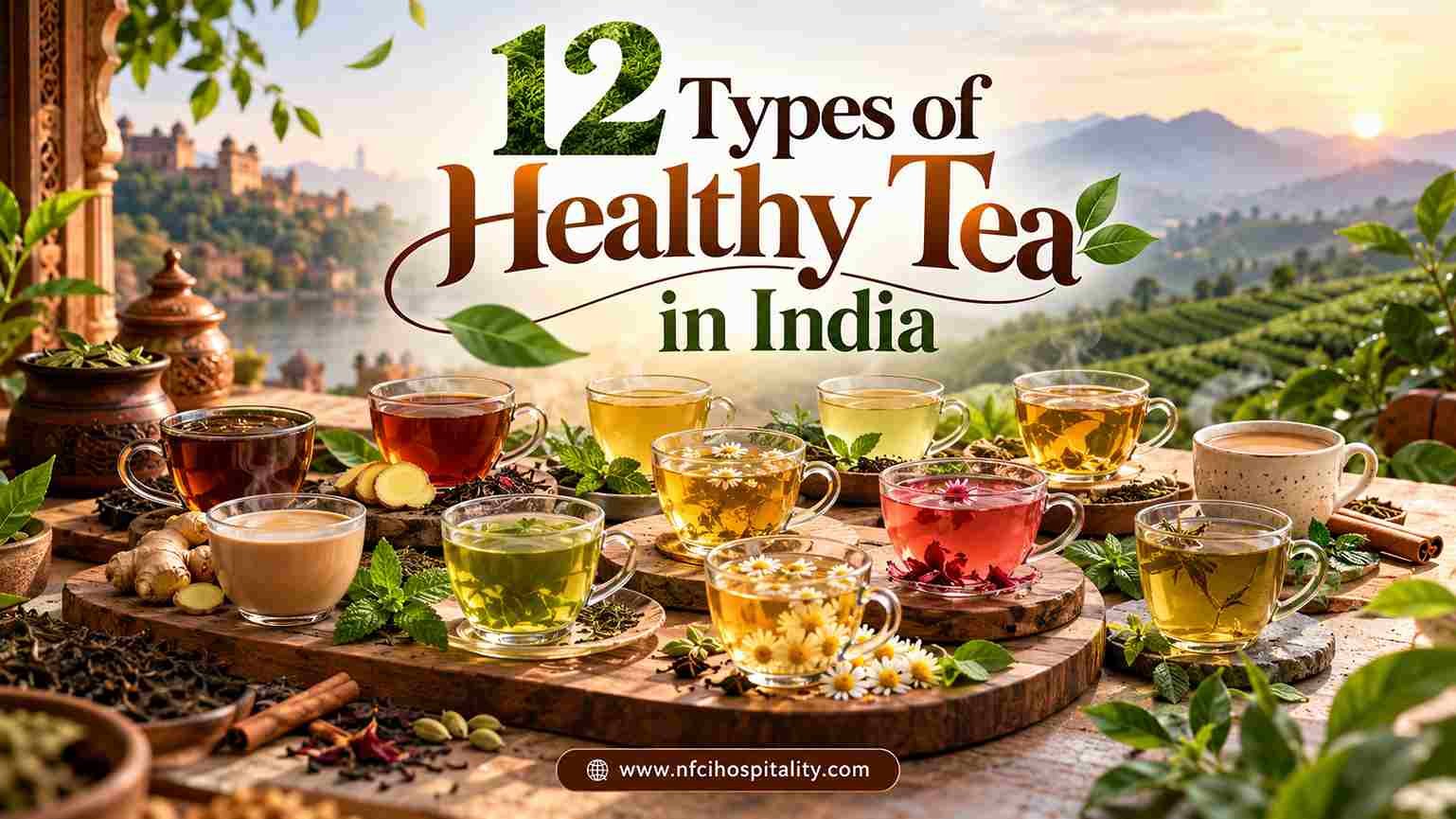
12 Types of Healthy Tea in India
Tea is one of the most loved hot drinks in India. Choosing healthy tea to drink is one of the best things that can offer you various health benefits while satisfying your morning tea cravings. Today, tea is a routine part of every Indian family. So, lets make make your routine a little healthier?
There are tons of healthy teas you can try out – but h
ow do you know which one is the best fit for you?
In this little guide, well be covering 12 different types of healthy tea found in India, so you can get a sense of what makes each one tick, and what benefits you can expect.
Did You Know?
It’s worth noting that not all “teas” actually come from the tea plant – green tea, black tea, white tea and oolong all are cultivated from the same origin, Camellia sinensis. But on the other hand, herbal teas like chamomile, peppermint, and hibiscus are made from altogether different plants.
12 Healthy Teas At a Glance
| Healthy Tea | Type | Caffeine* | Flavor | Commonly associated with |
|---|---|---|---|---|
| Green Tea | True tea | Yes | Fresh, slightly grassy | Antioxidant-rich compounds |
| Black Tea | True tea | Yes | Strong, malty | Polyphenols & alertness |
| White Tea | True tea | Yes | Light, delicate | Polyphenols |
| Oolong Tea | True tea | Yes | Floral to roasted | Polyphenols |
| Tulsi Tea | Herbal infusion | Usually caffeine-free | Herbal, earthy | Traditional Indian wellness use |
| Ginger Tea | Herbal infusion | Usually caffeine-free | Warm, spicy | Digestive comfort |
| Chamomile Tea | Herbal infusion | Caffeine-free | Floral, mild | Relaxation |
| Peppermint Tea | Herbal infusion | Caffeine-free | Cool, minty | Digestive comfort |
| Hibiscus Tea | Herbal infusion | Caffeine-free | Tart, fruity | Antioxidant compounds |
| Lemongrass Tea | Herbal infusion | Caffeine-free | Citrus-like | Refreshing flavor |
| Cinnamon Tea | Herbal infusion | Caffeine-free | Warm, spicy | Traditional use |
| Fennel Tea | Herbal infusion | Caffeine-free | Mild, naturally sweet | Traditional after-meal drink |
True Tea vs Herbal Tea: What’s the Difference?
True Tea
True teas are made from Camellia sinensis.
The main varieties include:
- Green tea
- Black tea
- White tea
- Oolong tea
- Pu-erh tea
Their differences come largely from harvesting and processing methods.
Herbal Tea
Herbal teas are called herbal infusions, prepared using ingredients other than Camellia sinensis.
These can include:
- Herbs
- Flowers
- Spices
- Seeds
- Fruits
- Roots
Tulsi, ginger, chamomile, peppermint, hibiscus and fennel are examples of herbal infusions.
12 Types of Healthy Tea in India
1. Green Tea
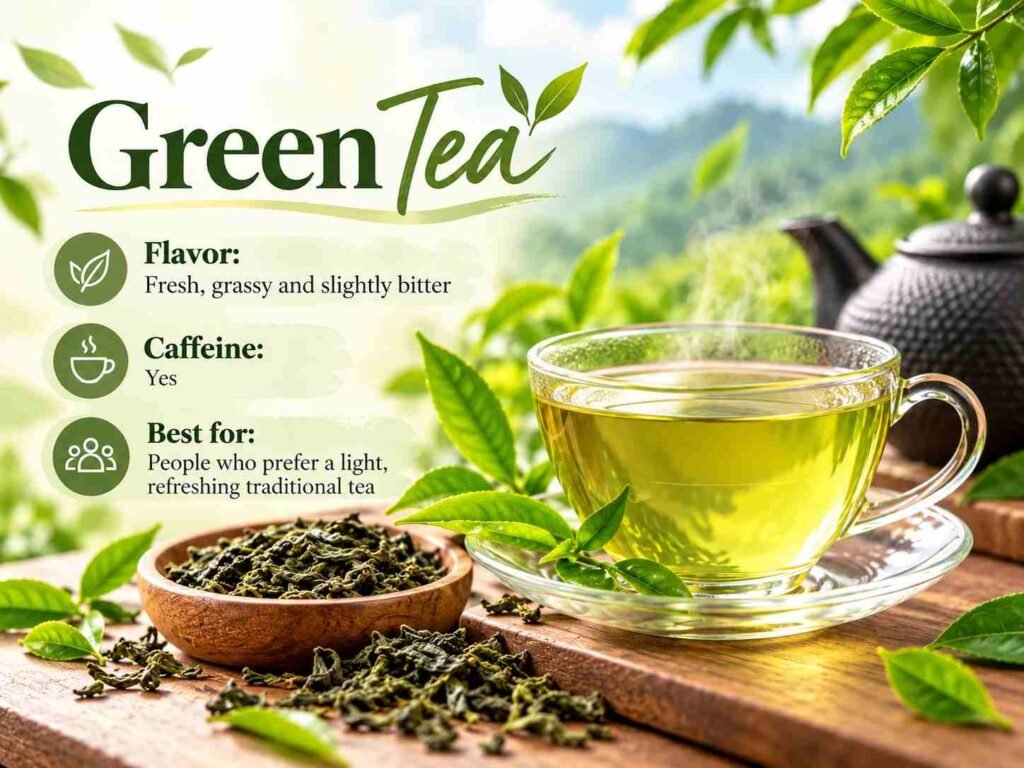
Green tea is the best choice for people looking for a healthy tea. It is made from Camellia sinensis.
Its leaves are not fermented in the same way as black tea, giving green tea its characteristic fresh flavor.
Green tea has been studied for several potential health effects, including cardiovascular risk factors and cholesterol. However, research does not support treating it as a magic weight-loss or disease-prevention drink.
How to enjoy it
Green tea can be enjoyed plain or combined with lemon, mint or ginger. Avoid over-steeping if you prefer a milder taste.
2. Black Tea
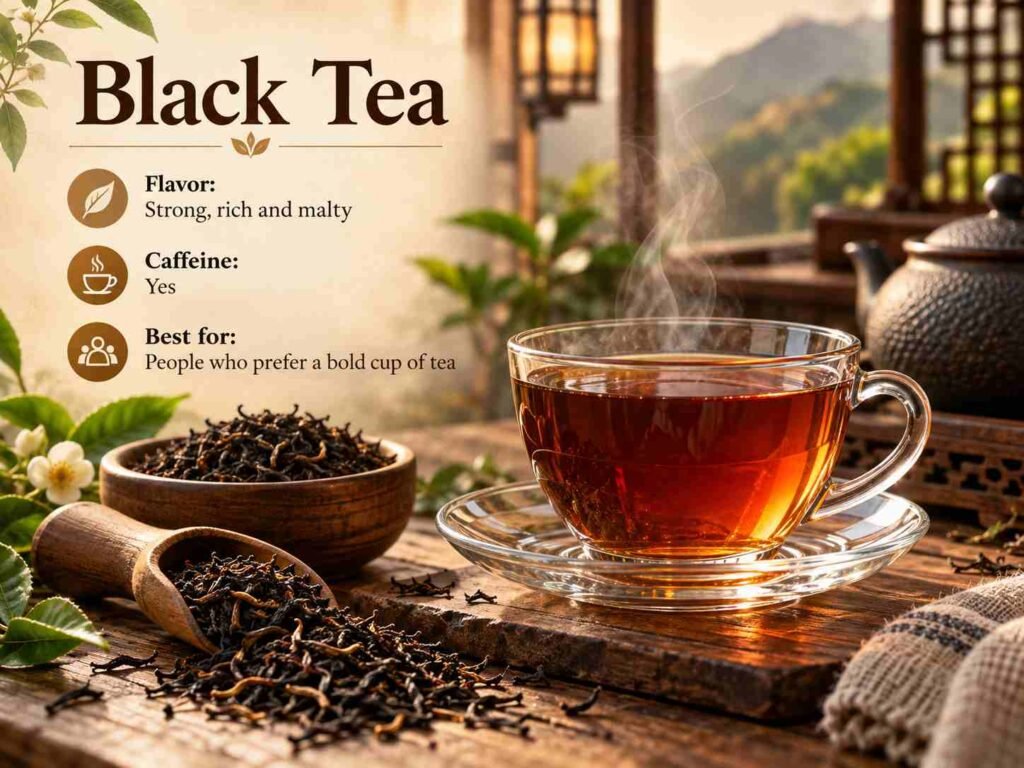
Black tea is another classic variety made from Camellia sinensis. It generally has a stronger flavor and darker color than green tea.
It is commonly enjoyed in India as plain black tea, lemon tea or milk tea.
This healthy tea contains naturally occurring polyphenols and caffeine. Research has explored its relationship with cardiovascular health and other outcomes, although individual studies and evidence strength vary.
3. White Tea
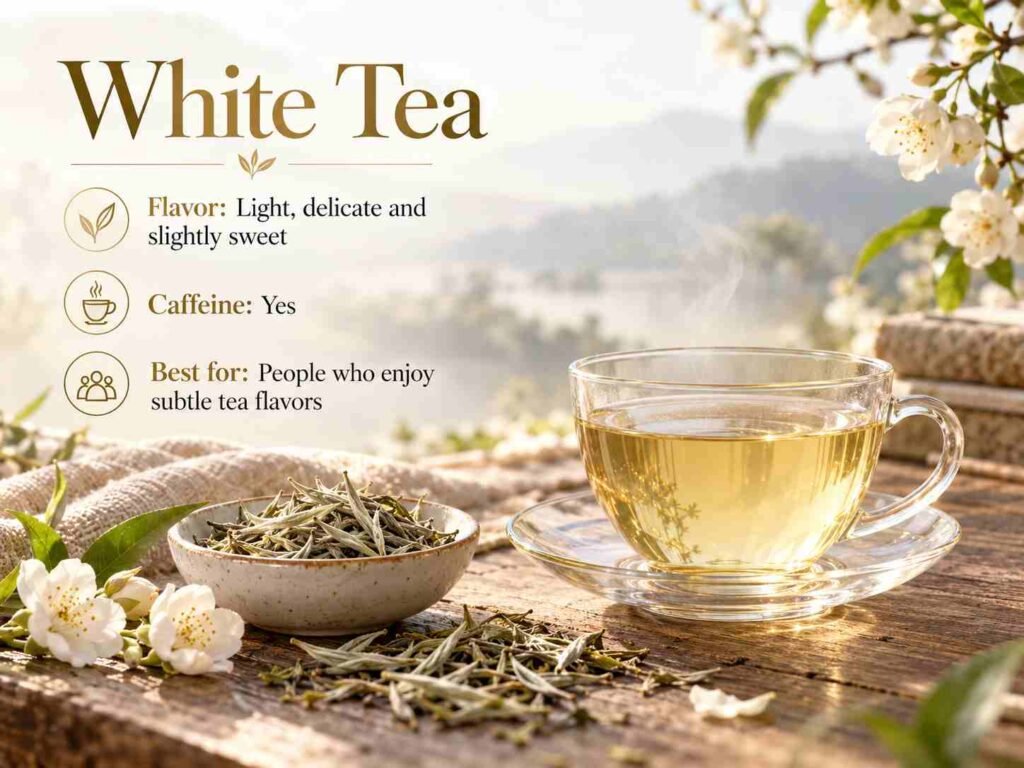
White tea is known for its delicate flavor and subtle aroma. Like green, black and oolong tea, it comes from Camellia sinensis.
Because it has a lighter flavor profile, white tea can be a good option for people who find stronger teas too intense.
Flavor: Light, delicate and slightly sweet
Caffeine: Yes
Best for: People who enjoy subtle tea flavors
White tea also contains naturally occurring plant compounds found in the tea plant.
4. Oolong Tea
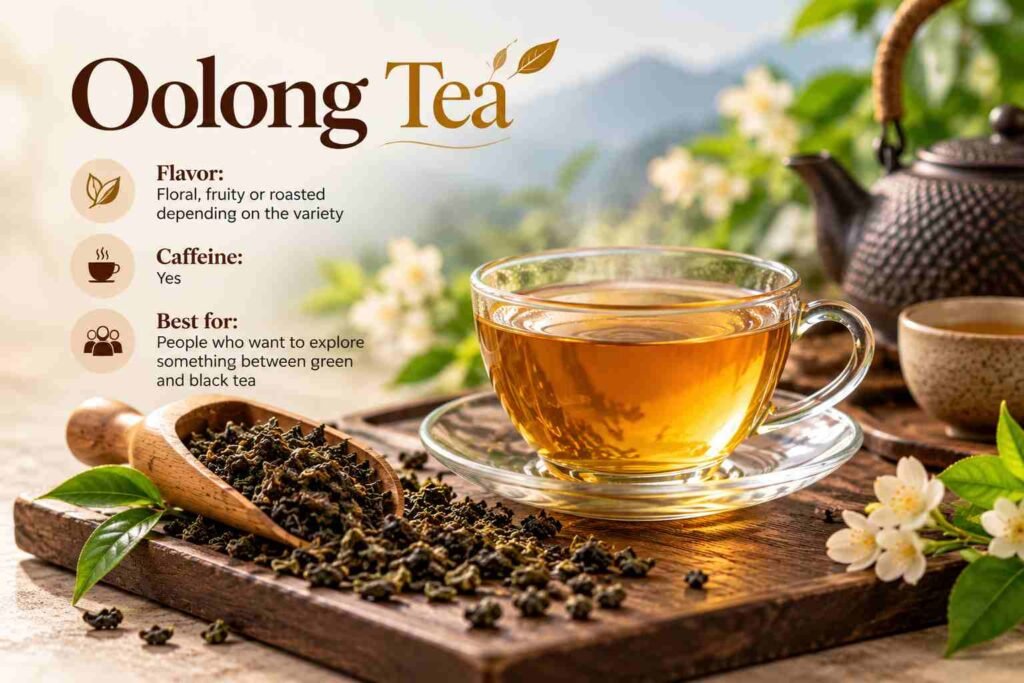
Oolong tea sits somewhere between green and black tea in terms of processing. It is partially oxidized, which gives it a wide range of possible flavors.
Depending on the variety, oolong tea can taste floral, fruity, creamy, roasted or nutty.
Oolong is particularly interesting for tea lovers who want to explore the diversity of traditional tea varieties.
5. Tulsi Tea
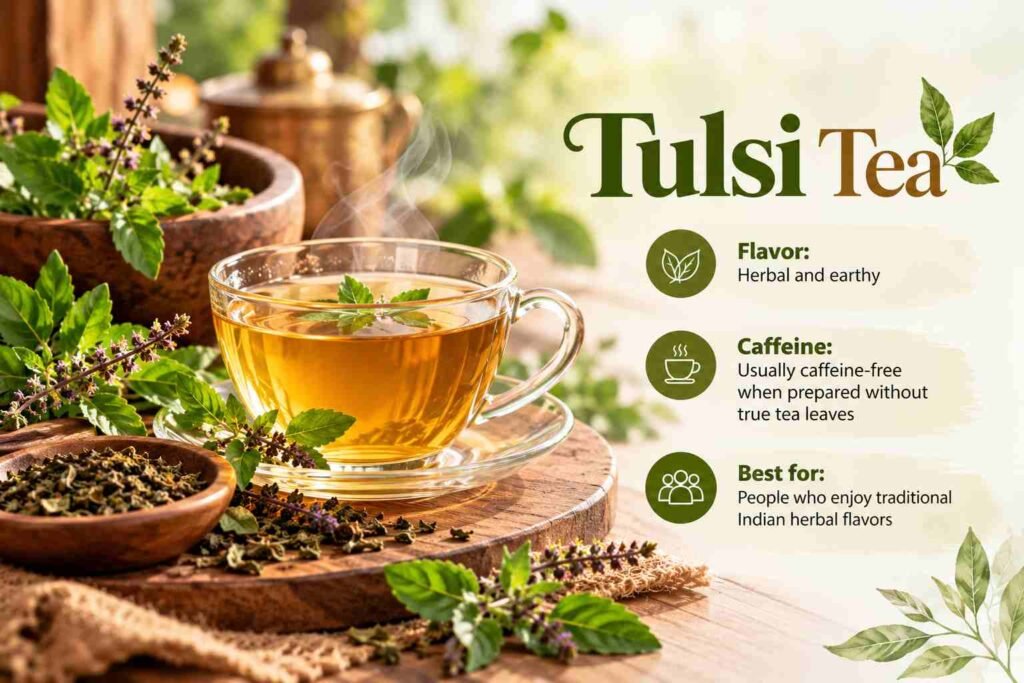
Tulsi, also known as holy basil, has a long history of traditional use in India. Tulsi tea is usually prepared using fresh or dried tulsi leaves and can also be blended with ginger, lemon or other herbs.
Its distinct herbal aroma makes it a popular choice among people looking for a traditional Indian herbal beverage.
If a tulsi blend also contains green or black tea leaves, its caffeine content can be different, so checking the ingredients is useful.
6. Ginger Tea
Ginger tea is a familiar favorite in Indian households. This healthy tea is warm and slightly spicy flavor makes it particularly popular during colder months.
You can make it with fresh ginger and hot water or combine ginger with black tea, green tea, lemon or other spices.
7. Chamomile Tea
Chamomile tea, is a famous herbal drink among many, made from fragrant chamomile flowers. It does not come from the traditional tea plant, making it naturally caffeine-free.
Its delicate floral taste makes chamomile tea a popular choice for those who prefer a low-key drink, especially in the evening when you just want something soothing to unwind with.
Flavor: Floral and mild
Caffeine: Naturally caffeine-free
Best for:Anyone looking for a relaxing drink in the evening or something to ease into a gentle evening routine.
8. Peppermint Tea
Peppermint tea has a naturally cool and refreshing flavor. It is generally prepared as an herbal infusion and does not naturally contain caffeine.
One of the things that makes peppermint tea so great is that its super refreshing minty taste can be a nice change of pace when you want something a bit lighter than your usual milky tea.
Flavor: Cool and minty
Caffeine: Naturally caffeine-free
Best for: People who enjoy refreshing herbal flavors
9. Hibiscus Tea
Hibiscus tea is brewed from hibiscus flowers and its just as easy to spot by its bright colour as it is by its distinctively sour taste.
It can be enjoyed hot or cold and pairs well with lemon, mint or other ingredients.
Flavor: Tart, fruity and refreshing
Caffeine: Naturally caffeine-free
Best for: Anyone who likes a tangy kick in their tea
Hibiscus has also been studied in relation to blood pressure, although the evidence is limited and its effects should not be considered equivalent to medical treatment.
10. Lemongrass Tea
Lemongrass gives tea a fresh citrus-like aroma and flavor. It can be used on its own as an herbal infusion or combined with ingredients such as ginger and mint.
It is especially enjoyable when served warm, but can also be chilled for a refreshing drink.
Flavor: Citrus-like and fresh
Caffeine: Usually caffeine-free when used as an infusion
Best for: People who enjoy bright, refreshing flavors
11. Cinnamon Tea
Cinnamon tea brings a warm and sweet – and we mean really sweet – naturally – smelling spicy flavour to your cup. You can easily make it by just chucking in a cinnamon stick into a cup of hot water or mixing it with other ingredients in any way you like.
Its strong aroma can make a cup flavorful without requiring large amounts of added sugar.
Flavor: Warm, spicy and aromatic
Caffeine: Naturally caffeine-free when prepared as an infusion
Best for: People who enjoy spice-based beverages
12. Fennel Tea
Fennel tea is a simple herbal infusion made by steeping fennel seeds in hot water. This healthy tea has a naturally aromatic and slightly sweet flavor.
Fennel is familiar in Indian households and is traditionally enjoyed after meals.
Flavor: Mild, aromatic and naturally sweet
Caffeine: Naturally caffeine-free
Best for: People who prefer mild herbal flavors
Which Healthy Tea Is Right for You?
There is no universal answer to which tea is the “best healthy tea.” Your choice can depend on flavor, caffeine preference and when you want to drink it.
| If you prefer… | You could explore… |
|---|---|
| A light traditional tea | Green tea |
| A strong tea | Black tea |
| A delicate flavor | White tea |
| A more complex tea experience | Oolong tea |
| A traditional Indian herbal flavor | Tulsi tea |
| A warm, spicy drink | Ginger tea |
| A floral evening infusion | Chamomile tea |
| A refreshing minty drink | Peppermint tea |
| A tangy beverage | Hibiscus tea |
| A citrusy flavor | Lemongrass tea |
| A warm spice flavor | Cinnamon tea |
| A naturally aromatic infusion | Fennel tea |
The “best” choice is ultimately the one that fits your taste and routine.
Which Teas Have Caffeine?
Generally caffeinated
- Green tea
- Black tea
- White tea
- Oolong tea
- Pu-erh tea
Naturally caffeine-free herbal infusions
- Chamomile
- Peppermint
- Hibiscus
- Fennel
- Cinnamon
- Many tulsi and ginger infusions
However – always double check the ingredients. A product that might look like “herbal tea” could have green or black tea leaves in it, which would change how much caffeine is in there.
Caffeine levels can also vary based on the amount of tea used, brewing time and serving size.
When Is the Best Time to Drink Healthy Tea?
It completely depends on your health goals and the type of tea. There isn’t one universal “best time” to drink tea.
Morning
Green, black or oolong tea can be suitable for people who enjoy caffeinated beverages in the morning.
Afternoon
Green, white or oolong tea can make a lighter alternative to another cup of strong milk tea.
Evening
If caffeine affects your sleep, a naturally caffeine-free herbal infusion such as chamomile or peppermint may be a better fit.
Note: To identify the best time to drink tea, you need to pay attention to how your body responds to caffeine.
Learn Cooking Skills with NFCI!
If cooking is your thing and you want to really discover the world of food & hospitality then take a closer look at the best hotel management institute in India.
NFCI (National Finishing and Culinary Institute) offers government-approved hotel management and culinary programs with practical training and industry exposure. Since 1990, this leading institute has shaped thousands of hospitality professionals who are now successfully working across India and abroad
Here, students gain knowledge and hands-on experience from experienced chefs. Moreover, they master culinary skills through best cookery classes in India.
Admissions are Open!
Explore our culinary and hotel management courses.
🌐 www.nfcihospitality.com
📞 98880-11222

You may also like

THINGS TO CHECK BEFORE JOINING A HOTEL MANAGEMENT INSTITUTE

17 HEALTHY SNACKS THAT CAN HELP WITH WEIGHT LOSS