
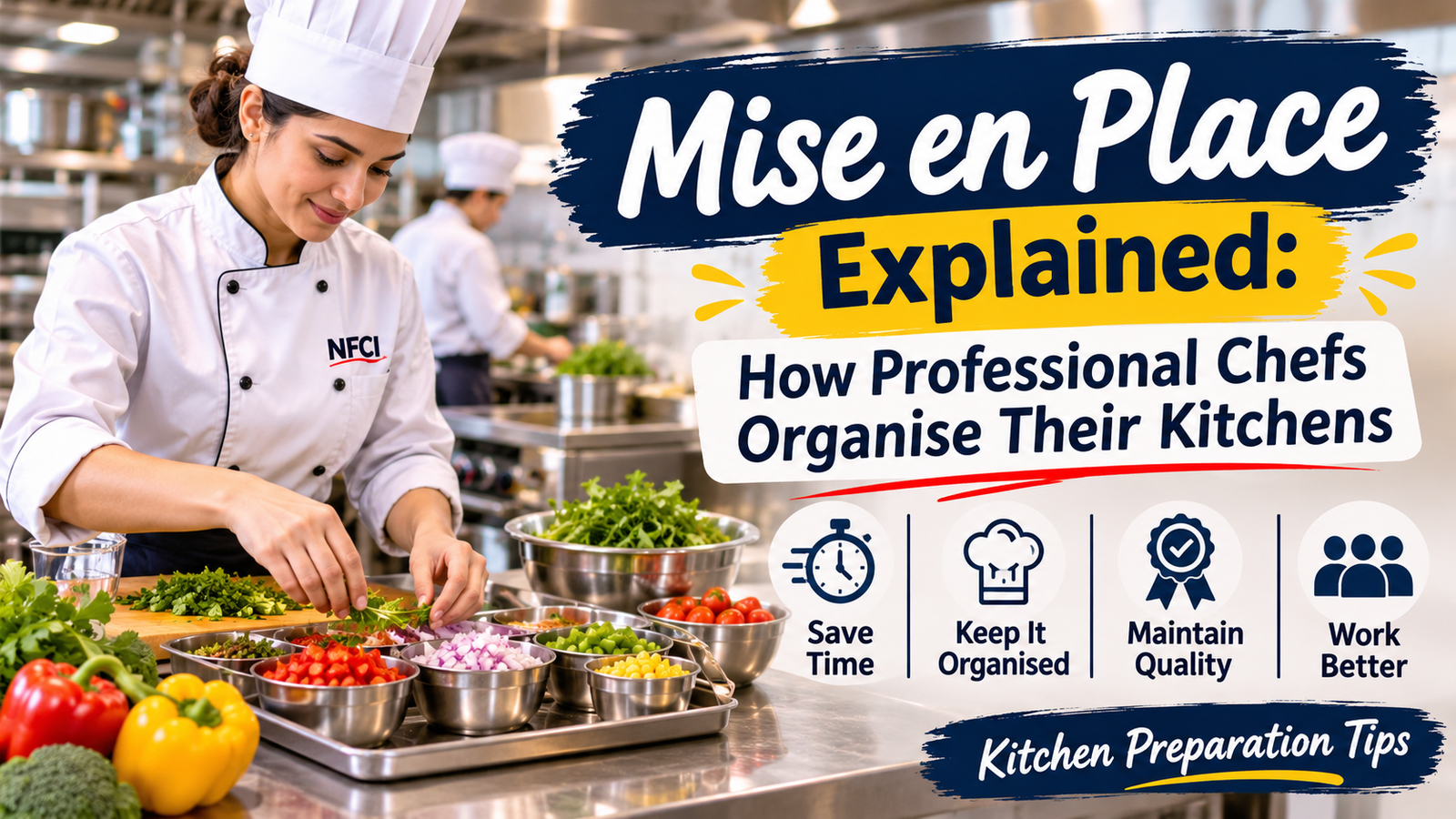
Mise en Place Explained: How Professional Chefs Organise Their Kitchens
Have you ever noticed how professional chefs prepare several dishes in a busy kitchen without getting confused?
Do you also wonder how they complete all the orders in the least amount of time?
One important reason behind this smooth kitchen workflow is Mise en Place.
Mise en Place is an important part of professional cooking. It helps the chefs to prepare ingredients, arrange equipment and organise their workspace before starting to cook. Whether someone is learning to cook at home or planning to become a professional chef, understanding this concept can make a big difference.
For students interested in developing practical culinary skills, learning kitchen organisation is also an important part of professional cooking and food production training.
What Is Mise en Place?
Mise en Place is a French term that means “everything in its place.” In cooking, it refers to preparing and arranging everything before starting a recipe.
This includes washing and cutting vegetables, measuring spices, preparing sauces, arranging cooking utensils and keeping ingredients ready for use.
For example, imagine you are preparing a vegetable pasta. Instead of stopping repeatedly to wash vegetables, cut onions, search for spices or look for a pan, you prepare everything beforehand.

Once the cooking begins, all the required ingredients and equipment are already available.
This is the basic idea behind Mise en Place.
Professional chefs follow this practice because it helps them stay organised, save time and maintain consistency while preparing food.
Why Is Mise en Place Important in Professional Kitchens?
A professional kitchen can become busy very quickly. Chefs may need to prepare different dishes at the same time, manage cooking temperatures and coordinate with other kitchen staff.
Without proper preparation, even a simple order can become difficult to manage.
Here are some reasons why Mise en Place is important:
1. Saves Time During Cooking
When ingredients are already washed, chopped and measured, chefs do not need to stop cooking to complete these tasks.
This makes the entire cooking process smoother, especially during busy restaurant hours.
2. Keeps the Kitchen Organised
Kitchen organisation is not only about keeping things clean. It also means knowing where everything is placed.
When knives, chopping boards, ingredients and utensils have designated spaces, chefs can work more comfortably.
3. Helps Maintain Food Quality
Using measured ingredients and following a planned preparation process helps chefs maintain consistency in their dishes.
For restaurants, consistency matters because customers expect the same taste and quality whenever they order their favourite food.
4. Reduces Last-Minute Confusion
Imagine preparing a dish and suddenly realising that one important ingredient is missing. It can interrupt the entire process.
Mise en Place helps chefs check their ingredients and equipment before cooking starts.
5. Improves Team Coordination
In professional kitchens, cooking is a team activity. Different chefs may be responsible for different tasks.
When everyone knows what needs to be prepared and where things are kept, the team can work together more efficiently.
How Do Professional Chefs Organise Their Kitchens?
Every kitchen has its own working style, but professional chefs generally follow a few common kitchen preparation techniques.
Here is how the process usually works.
1. Read the Recipe Before Starting
Before preparing anything, chefs understand the recipe and identify all the ingredients, equipment and cooking methods required.
This helps them plan their work instead of making decisions at the last minute.
2. Collect All the Ingredients
The next step is to collect the required ingredients. Vegetables, spices, dairy products, sauces and other ingredients are checked before preparation.

Chefs also pay attention to freshness and proper storage. Perishable ingredients should be kept at safe temperatures until they are needed.
3. Wash, Cut and Measure Ingredients
This is one of the most important parts of Mise en Place. Vegetables are washed and chopped according to the recipe. Spices are measured, sauces are prepared and other ingredients are portioned.
For example, if a recipe requires finely chopped onions, diced tomatoes and measured spices, these should be prepared before cooking begins.
4. Arrange Cooking Equipment
Professional cooking skills also involve knowing which equipment is needed for a particular dish.
Chefs arrange their knives, pans, ladles, mixing bowls, chopping boards and other utensils before starting.

Keeping frequently used equipment within easy reach makes the cooking process more comfortable.
5. Organise the Workstation
A workstation should be clean, organised and ready for use. Ingredients can be arranged according to the order in which they will be used. Separate chopping boards should be used appropriately for different food types to prevent cross-contamination.
A well-organised workstation makes it easier to focus on cooking rather than searching for things.
6. Clean as You Work
Kitchen organisation does not end once cooking begins.
Professional chefs follow the habit of cleaning their workstations, removing waste and washing used equipment whenever possible.
This keeps the kitchen manageable, particularly when several dishes are being prepared together.
Mise en Place Examples in Everyday Cooking
You do not need to work in a five-star hotel or restaurant to follow Mise en Place. It can be practised in your home kitchen too.
Here are some simple examples:
| Dish | Preparation Before Cooking |
| Vegetable Fried Rice | Chop vegetables, prepare rice, measure sauces and keep spices ready |
| Paneer Butter Masala | Cut paneer, prepare tomato gravy, measure spices and arrange cooking utensils |
| Pasta | Boil pasta, chop vegetables, prepare sauce and grate cheese |
| Indian Dal | Wash and measure dal, prepare spices, chop onions and tomatoes |
| Chocolate Cake | Measure flour, sugar and cocoa powder, prepare baking equipment and preheat the oven |
These small preparation steps make cooking easier and help you understand why professional chefs give so much importance to planning.
Common Mistakes to Avoid While Following Mise en Place
Although the concept is simple, beginners sometimes make mistakes while practising it.
Here are a few things to keep in mind:
- Not reading the complete recipe: Always understand the cooking process before collecting ingredients.
- Forgetting to measure ingredients: Approximate measurements may affect the final taste and texture.
- Using unclean equipment: Clean utensils and chopping boards are essential for safe food preparation.
- Keeping ingredients uncovered: Store prepared ingredients properly to maintain freshness and prevent contamination.
- Preparing too early: Some ingredients lose freshness or quality if they are cut or prepared too far in advance.
- Ignoring workstation cleaning: A messy workstation can slow down cooking and make food preparation difficult.
Learning from these mistakes helps beginners develop better kitchen habits.
Also Read- How Professional Chefs Prepare Festive Menus
Learning Kitchen Organisation as a Professional Culinary Skill
If you are interested in becoming a chef, learning recipes is only one part of the journey. You also need to understand how a professional kitchen operates.
Kitchen organisation, ingredient preparation, food safety, cooking methods and equipment handling are important skills that students need to develop through regular practice.
This is why practical training matters when choosing a culinary course.
Students looking for Cooking Institutes in Dehradun should consider whether the institute provides opportunities to practise in a kitchen environment.
At NFCI, students interested in professional cooking and hospitality can explore culinary and food production training. The focus is on helping learners understand cooking techniques, kitchen practices and the skills required in the hospitality industry.
If you are searching for the Best Cooking Institute in Dehradun, look beyond the course name. Check the practical learning opportunities, course content and bakery skills you will get to practise.
You can also explore NFCI if you are interested in developing your cooking knowledge and understanding how professional kitchens work.
Conclusion
Good cooking starts before you turn on the stove. The way you prepare your ingredients, organise your equipment and manage your workstation can influence the entire cooking experience.
Mise en Place may seem like a small kitchen habit, but it plays an important role in professional cooking. It teaches patience, planning, discipline and attention to detail.
Whether you are cooking at home or planning to build a career as a chef, learning to keep everything in its place is a skill worth developing.
At NFCI, students interested in culinary arts can explore practical learning opportunities and build an understanding of the skills used in professional kitchens.
Frequently Asked Questions (FAQs)
- What is Mise en Place in cooking?
Mise en Place is a French term meaning everything in its place. It refers to preparing ingredients, arranging equipment and organising the workstation before starting to cook.
- Why do professional chefs follow Mise en Place?
Professional chefs follow this practice to save time, maintain kitchen organisation, improve workflow and prepare dishes more efficiently.
- Is Mise en Place important for beginners?
Yes. Beginners can develop good cooking habits by learning to measure ingredients, prepare vegetables and organise their workstations before cooking.
- What are the basic steps of Mise en Place?
The basic steps include reading the recipe, collecting ingredients, washing and cutting vegetables, measuring ingredients, arranging equipment and preparing a clean workstation.
- Can I learn professional kitchen preparation techniques through a cooking course?
Yes. A practical cooking course can help students understand ingredient preparation, kitchen organisation, food safety and professional cooking techniques.

You may also like

Hotel Management Courses in Patiala: Eligibility and Career Scope