
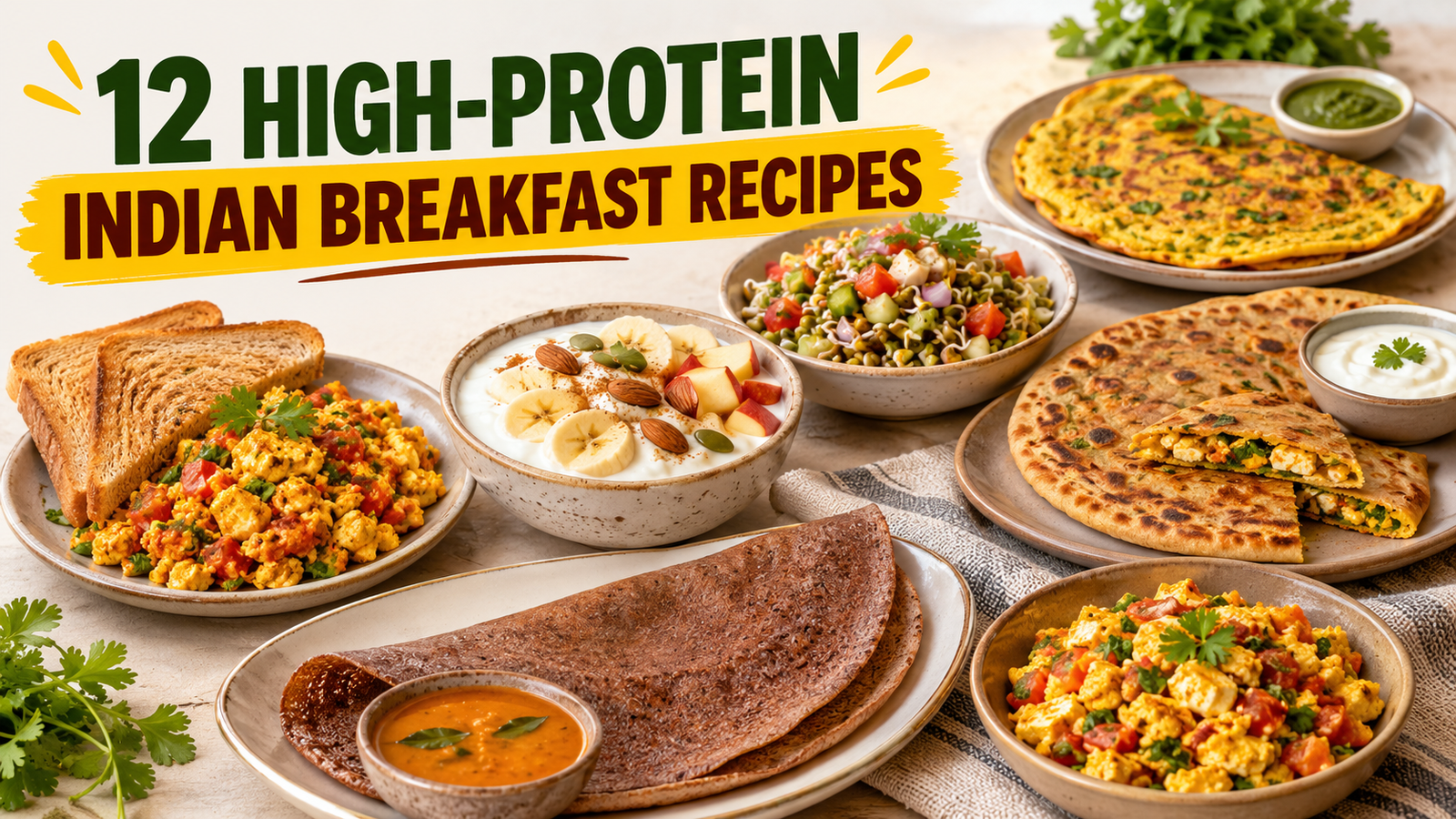
12 High-Protein Indian Breakfast Recipes to Start Your Day
What you eat in the morning can make a big difference to how you feel throughout the day. A good breakfast gives your body energy, helps you stay satisfied and makes it easier to follow a balanced eating routine.
Many people in India enjoy starting their day with parathas or sandwiches. These are popular breakfast choices, but adding protein-rich ingredients can make them more balanced and satisfying.
The good news is that preparing a High-Protein Indian Breakfast does not mean you have to spend hours in the kitchen or buy expensive ingredients. Everyday foods such as paneer, eggs, dal, sprouts, chickpeas, curd and besan can help you prepare delicious breakfast options.
Quick-Reference: Protein Content of Common Indian Breakfast Ingredients
Ingredient | Approx. Protein per 100 g | Typical Serving | Protein per Serving |
Moong dal (dry) | 24 g | 60 g | 14 g |
Besan | 22 g | 50 g | 11 g |
Paneer | 18 g | 100 g | 18 g |
Sattu | 20 g | 60 g | 12 g |
Whole eggs | 13 g | 2 eggs | 12–13 g |
Soya granules (dry) | 52 g | 40 g | 20–21 g |
Greek-style curd | 9–10 g | 150 g | 13–15 g |
Boiled chickpeas | 9 g | 100 g | 9 g |
Moong sprouts | 3 g | 100 g | 3 g |
Oats (dry) | 13 g | 40 g | 5 g |
| Ragi flour | 7 g | 50 g | 3.5 g |
| Mixed dal (dry) | 22–25 g | 60 g | 13–15 g |
Whether you are a student, working professional or someone who enjoys experimenting with food, these 12 High-Protein Indian Breakfast recipes are worth trying.
1. Paneer Bhurji with Whole Wheat Toast
Paneer bhurji is a popular Indian breakfast that is easy to prepare and full of flavour. Paneer provides protein, while vegetables add colour and variety to the dish.

Ingredients:
- 100 grams paneer
- 1 small onion
- 1 tomato
- 1 green chilli
- ½ teaspoon turmeric
- ½ teaspoon cumin seeds
- Salt and coriander leaves
- 2 slices whole wheat bread
How to Prepare:
Heat a little oil in a pan and add cumin seeds. Add chopped onions, tomatoes and green chillies. Cook until the vegetables become soft. Crumble the paneer, add turmeric and salt, and mix everything well. Cook for another 3–4 minutes and finish with fresh coriander.
Serve hot with whole wheat toast.
This is a simple High-Protein Indian Breakfast option for people who enjoy traditional Indian flavours.
2. Moong Dal Chilla
Moong dal chilla is one of the easiest High-Protein Indian Breakfast recipes to make with ingredients already available in most Indian kitchens.

Ingredients:
- 1 cup yellow or green moong dal
- 1 small onion
- 1 green chilli
- Ginger
- Coriander leaves
- Salt to taste
How to Prepare:
Soak moong dal for 3–4 hours. Grind it into a smooth batter with ginger and a little water. Add chopped onions, coriander, green chillies and salt.
Heat a non-stick pan and spread the batter like a dosa. Cook on both sides until golden brown.
Serve with mint chutney or plain curd.
You can also add grated paneer to the batter to make this breakfast more filling.
3. Besan Chilla with Paneer Filling
If you enjoy savoury pancakes, besan chilla is a great breakfast choice. It is made with gram flour and can be prepared in just a few minutes.

Ingredients:
- 1 cup besan
- ½ cup crumbled paneer
- 1 small onion
- 1 tomato
- Turmeric and red chilli powder
- Coriander leaves
- Salt to taste
How to Prepare:
Mix besan with water to prepare a smooth batter. Add chopped onions, tomatoes, spices and coriander leaves.
Pour the batter onto a heated pan and spread it evenly. Cook both sides until golden. Add crumbled paneer as a filling and fold the chilla.
This combination makes a tasty and convenient High-Protein Indian Breakfast for busy mornings.
4. Sprouts Chaat
Sprouts chaat is a refreshing option for people who prefer a light yet High-Protein Indian Breakfast.

Ingredients:
- 1 cup boiled moong sprouts
- 1 small onion
- 1 tomato
- ½ cucumber
- Lemon juice
- Chaat masala
- Fresh coriander
How to Prepare:
Take boiled sprouts in a bowl. Add chopped onion, tomato and cucumber. Sprinkle chaat masala, add lemon juice and mix everything properly.
Garnish with coriander leaves and serve fresh.
Sprouts are a useful plant-based protein source. You can also add boiled chickpeas or roasted peanuts for additional texture and nutrients.
5. Masala Egg Bhurji
For people who eat eggs, egg bhurji is a quick and delicious breakfast option.

Ingredients:
- 2 eggs
- 1 small onion
- 1 tomato
- 1 green chilli
- Turmeric
- Black pepper
- Salt
- Coriander leaves
How to Prepare:
Heat a little oil in a pan and add chopped onions and green chillies. Add tomatoes and cook until soft. Beat the eggs in a separate bowl and pour them into the pan.
Keep stirring until the eggs are fully cooked. Add salt, black pepper and coriander leaves.
Serve with whole wheat toast or a small roti.
It is a convenient High-Protein Indian Breakfast that can be prepared in around 10 minutes.
6. Greek Yogurt and Fruit Bowl
Not every Indian breakfast needs to be cooked. A yogurt bowl is a good option when you are short on time.

Ingredients:
- 1 bowl plain Greek yogurt
- 1 small banana
- A few pieces of apple
- 1 tablespoon pumpkin seeds
- 1 tablespoon almonds
- A little cinnamon powder
How to Prepare:
Add Greek yogurt to a bowl. Top it with chopped fruits, almonds and pumpkin seeds. Sprinkle a little cinnamon powder and serve.
Greek yogurt generally contains more protein than regular curd, although the amount depends on the product.
This is a convenient High-Protein Indian Breakfast for students and working professionals who want something quick and refreshing.
7. High-Protein Vegetable Oats
Oats can be made more interesting by preparing them in an Indian-style masala flavour.

Ingredients:
- ½ cup oats
- ½ cup boiled green peas
- 1 small carrot
- 1 small onion
- ½ cup milk or water
- Cumin seeds
- Black pepper
- Salt
How to Prepare:
Heat a little oil in a pan and add cumin seeds. Add chopped onions, carrots and peas. Cook for a few minutes.
Add oats, milk or water, salt and black pepper. Cook until the oats become soft.
You can add paneer cubes or serve the oats with plain curd to increase the protein content.
8. Sattu Drink with Roasted Chana
Sattu is a traditional Indian ingredient that is especially popular in Bihar and other parts of North India. It is made from roasted gram and can be used in both sweet and savoury preparations.

Ingredients:
- 2 tablespoons sattu
- 1 glass chilled water
- Lemon juice
- Roasted cumin powder
- Black salt
- Fresh coriander
How to Prepare:
Add sattu to a glass of water and mix until there are no lumps. Add lemon juice, roasted cumin powder, black salt and coriander.
Stir well and serve.
You can pair this drink with roasted chana or a small vegetable sandwich for a more High-Protein Indian Breakfast.
9. Paneer Stuffed Whole Wheat Paratha
Parathas are a favourite in many Indian households. Instead of choosing only a potato filling, try making paneer-stuffed parathas.

Ingredients:
- 1 cup whole wheat flour
- 100 grams paneer
- 1 small onion
- Green chilli
- Coriander leaves
- Ajwain
- Salt
How to Prepare:
Prepare a soft dough using whole wheat flour and water.
In another bowl, crumble paneer and mix it with onions, green chillies, coriander and spices.
Roll a small portion of dough, add the paneer filling and seal it properly. Roll again and cook on a tawa using a little oil or ghee.
Serve with plain curd.
This is a filling High-Protein Indian Breakfast that combines traditional taste with a protein-rich filling.
10. Ragi Dosa with Sambar
Ragi dosa is a nutritious alternative to regular dosa. When paired with sambar, it becomes a more balanced breakfast.
Ingredients:
- ½ cup ragi flour
- ¼ cup rice flour
- ¼ cup curd
- Water as required
- Salt
- Cumin seeds
- Vegetables and dal for sambar
How to Prepare:
Mix ragi flour, rice flour, curd, cumin seeds and salt. Add water gradually to prepare a thin batter.
Pour the batter onto a heated dosa pan and cook until crisp. Prepare vegetable sambar using toor dal, vegetables and spices.
Serve the dosa hot with sambar.
The dal in sambar adds plant-based protein to this South Indian breakfast combination.
11. Chickpea and Paneer Sandwich
A sandwich is an excellent option for people who need High-Protein Indian Breakfast on the go. Adding chickpeas and paneer makes it more satisfying.

Ingredients:
- 2 slices whole wheat bread
- ½ cup boiled chickpeas
- 50 grams paneer
- 1 small onion
- 1 small tomato
- Black pepper
- Salt
- Mint chutney
How to Prepare:
Mash the boiled chickpeas and paneer together. Add chopped onion, tomato, black pepper and salt.
Spread mint chutney on the bread slices. Add the prepared filling and cover with another slice.
Toast the sandwich on a pan until both sides become crisp.
This is a practical High-Protein Indian Breakfast for school students, college students and working professionals.
12. Mixed Dal Idli
If you enjoy South Indian food, mixed dal idli is another High-Protein Indian Breakfast recipe you can try.

Ingredients:
- ½ cup moong dal
- ½ cup urad dal
- ¼ cup chana dal
- ½ cup idli rice
- Salt
- Water as required
How to Prepare:
Wash and soak the dals and rice separately for a few hours. Grind them into a batter and mix everything together. Allow the batter to ferment.
Add salt and pour the batter into greased idli molds. Steam until the idlis are cooked.
Serve with coconut chutney and sambar.
Using different dals adds variety to the protein sources in your regular breakfast.
Tips to Make High-Protein Indian Breakfast
You do not need to completely change your eating habits to include more protein in your morning meals. A few simple changes can help.
Here are some useful tips:
- Add paneer: Include paneer in chilla, sandwiches, parathas and vegetable rolls.
- Choose dal-based recipes: Moong dal, besan and mixed dal are versatile ingredients for Indian breakfasts.
- Include curd: Serve plain curd or Greek yogurt with parathas and chillas.
- Try sprouts: Add boiled sprouts to salads, chaat and sandwiches.
- Include eggs: If you eat eggs, try boiled eggs, omelettes or egg bhurji.
- Combine food groups: Pair whole grains with protein-rich foods for a more balanced meal.
- Plan your breakfast: Prepare ingredients such as soaked dal and boiled chickpeas in advance to save time.
Remember, your protein requirements depend on your age, activity level and overall health. A balanced diet should include carbohydrates, healthy fats, vitamins, minerals and protein.
Learn More About Cooking with NFCI
Preparing a delicious High-Protein Indian Breakfast is not just about following a recipe. It also involves understanding ingredients, choosing the right cooking methods, maintaining hygiene and learning how different flavours work together.
At NFCI (National Finishing and Cookery Institute), aspiring chefs and hospitality students get opportunities to explore different cooking techniques and develop practical culinary skills.
Whether you are interested in Indian cooking, bakery, food production or professional culinary training, learning from experienced instructors can help you understand the basics of food preparation and kitchen operations.
If you are looking for cooking classes or professional culinary courses, NFCI offers learning opportunities for aspiring chefs. Explore the following options:
- Cooking Classes in Bathinda
- Best Cooking Classes in Bathinda
- Cooking Institutes in Bathinda
- Cooking Courses in Bathinda
- Cooking Classes in Jalandhar
- Best Cooking Classes in Jalandhar
- Cooking Classes in Amritsar
- Best Cooking Classes in Amritsar
- Cooking Courses in Amritsar
- Culinary Courses in Amritsar
- Cooking Classes in Ludhiana
- Cooking Classes in Mohali
- Cooking Classes in Hoshiarpur
- Best Cooking Institute in Dehradun
- Top Cooking Institutes in Dehradun
- Cooking Courses in Dehradun
- Cooking Classes in Dehradun
Visit the NFCI website to explore courses, campus details and admission-related information.
Conclusion
A healthy breakfast does not have to be complicated or boring. Start with recipes you already enjoy and try adding different protein sources to your everyday meals. With a little planning and some creativity, you can make your morning food both tasty and nutritious.
Try these High-Protein Indian Breakfast recipes at home and discover which ones become your family favourites. And if cooking interests you beyond your home kitchen, explore professional culinary learning opportunities with NFCI.
Explore more cooking tips, culinary courses and food-related blogs at NFCI.
Admissions are Open!
Explore our cooking, culinary and hotel management courses.
🌐 https://nfcihospitality.com/

You may also like
7 Must-Try Traditional Punjabi Winter Dishes

10 Healthy Drinks to Include in Your Diet After Diwali