
7 Must-Try Traditional Punjabi Winter Dishes
Winter in Punjab is not just about cold mornings, warm clothes and foggy evenings. It is also the season of delicious homemade food. Punjabi winter dishes are known for its rich flavours, traditional cooking methods and use of fresh seasonal ingredients.
In the winter season we can enjoy dishes made with green vegetables, jaggery, ghee, wheat flour, dry fruits and fresh spices. The fragrance and the warm ingredients make the cold winter days comfortable.
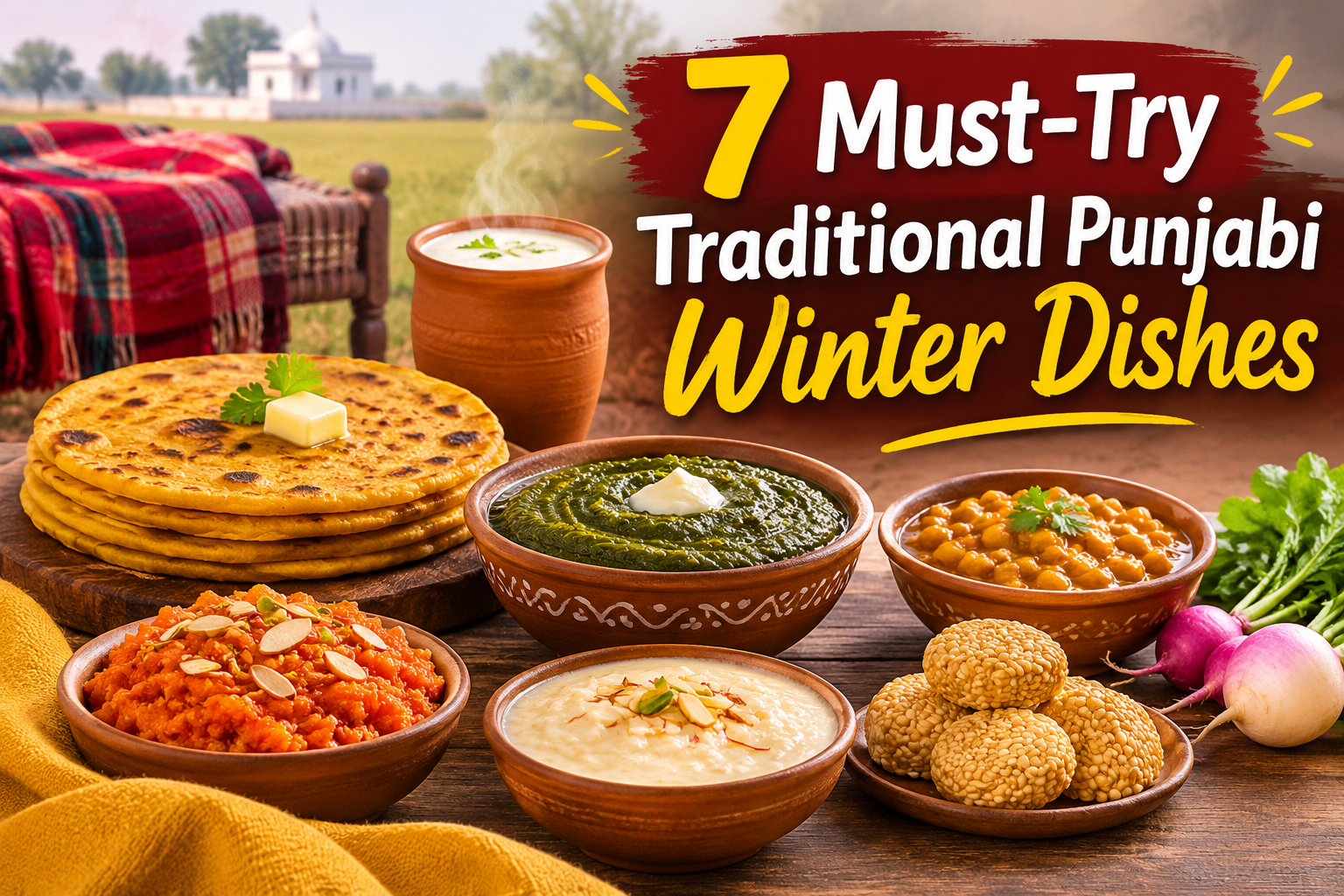
Seven famous and Traditional Punjabi Dishes
1. Sarson da Saag with Makki di Roti
When we talk about Punjabi Winter dish, Sarson da Saag with Makki di Roti is probably the first dish that comes to mind. It is one of the most loved traditional meals in Punjab.

Sarson da Saag is prepared using fresh mustard greens, spinach, bathua and other seasonal leafy vegetables. To prepare the homemade Sarson da Saag, these greens are properly washed, chopped, and cooked slowly on medium flame. The original taste it receives after it is blended using the traditional wooden blender. You can enhance the taste of this Punjabi winter dish by adding ghee or butter.
It is usually served with Makki di Roti. Makki di Roti is made from maize flour. Many people also include white butter, jaggery and a glass of fresh buttermilk to enjoy the traditional taste.
Why make it special?
- It is prepared using fresh winter vegetables.
- It is the traditional food culture representation of Punjab.
- It becomes mouthwatering when served hot with homemade butter.
- It is a popular winter meal in Punjabi households.
2. Gajar ka Halwa
Winter is the perfect time to enjoy fresh red carrots. And what else can be the better way to use them than making Gajar ka Halwa?

Gajar ka Halwa is another one of the most popular Punjabi winter dishes of the winter season. It is prepared using fresh grated carrots, milk, sugar, ghee and dry fruits. The mixture is cooked on slow flame until the carrots become soft and absorb the flavours of milk and ghee.
Some families also prepare it using khoya (or mawa) to give it a richer taste and flavour. A bowl of warm Gajar ka Halwa always makes winter evenings more enjoyable. You can serve this Punjabi winter dish after lunch, dinner or enjoy it during a family gathering.
What makes it popular?
- Fresh winter carrots give it a natural sweetness.
- You can easily prepare it with simple kitchen ingredients.
- You can serve it during festivals and family celebrations.
- You can enjoy it warm or cold.
3. Pinni
Pinni is a traditional Punjabi winter dish in Punjabi homes where families prepare large batches during the colder months.
Pinni is generally made using wheat flour, desi ghee, jaggery or sugar, almonds, edible gum (gond) and other dry fruits. All the ingredients are roasted and mixed properly. After the mixture becomes a bit cold the small round balls are formed from it.

Different families have their own recipes for making Pinni. Some families also make besan pinni. The best thing about Pinni is that you can prepare it in advance and store it. You can enjoy the pinning over several days when stored properly.
Why do Punjabis love Pinni?
- It is a traditional homemade winter sweet.
- It uses simple ingredients commonly found in Punjabi kitchens.
- It is a popular choice for sharing with family and friends.
- It is often prepared during winter celebrations.
4. Panjiri
Panjiri is another popular Punjabi winter dish. It is known for its rich taste, grainy texture and wonderful aroma of roasted ingredients.
Traditional Panjiri is prepared using wheat flour, desi ghee, powdered sugar or jaggery, almonds, cashews, makhana and edible gum. You can also add coconut powder, cardamom, etc in the panjiri.

In panjiri, the flour and other ingredients are roasted properly on low heat. Once everything is ready, you can mix the ingredients to create a delicious homemade sweet.
What makes Panjiri special?
- It has a rich and nutty flavour.
- It is made using healthy ingredients that are good for our health, especially old age people.
- Different families have their own traditional recipes.
- It can be stored and enjoyed over time.
5. Mooli and Methi Paratha
Parathas are an important part of Punjabi winter dishes. During winter, ours kitchens are always filled with fresh flavours of radish and fenugreek in making the popular Mooli and Methi Parathas.
Mooli Paratha is prepared using grated radish mixed with green chillies, coriander, spices and salt. The filling is placed inside wheat dough, rolled and cooked on a hot tawa (cooking pan) with ghee or oil.

Methi Paratha includes fresh fenugreek leaves mixed with flour and spices. It has a slightly bitter and earthy flavour. It tastes wonderful when you serve it with homemade curd, pickle or butter.
These Punjabi winter dishes are commonly enjoyed during breakfast, but to satisfy your taste buds you can also include them in lunch or dinner.
Why try these parathas?
- They use fresh seasonal vegetables.
- They are easy to prepare at home.
- They can be served with curd, butter or pickle.
- They are a delicious option for winter breakfasts.
6. Amritsari Kulcha
How can you forget Amritsari Kulcha if talking about famous Punjabi winter dishes? Originally associated with Amritsar, this popular dish is now enjoyed everywhere in India.
Amritsari Kulcha is a stuffed flatbread usually prepared with a filling of mashed potatoes, onions, coriander, green chillies and spices. The dough is prepared separately, filled with the potato mixture and traditionally baked in a tandoor.

Once cooked, it is brushed with butter and served with spicy chole, onion salad and chutney.
You can enjoy Amritsari Kulcha throughout the year, but it is a satisfying hot meal during cold winter days.
Why Amritsari Kulcha is famous?
- It has a crispy outer layer and soft filling.
- The unique taste of traditional Punjabi spices.
- The amazing combination with spicy chole.
- It represents the famous food culture of Amritsar.
Read More- 5 Best Amritsari Kulcha Types You Must Try
7. Mah di Daal
Mah di Daal is another traditional Punjabi winter dish. It is made using whole black urad pulses. It is slow-cooked for the final thick texture and rich flavour.
The pulses are usually soaked before cooking and then simmered until soft. It is then tempered with ingredients like tomatoes, ginger, garlic, onions and traditional Indian spices. A final tempering of ghee or butter can add extra flavour.

It is generally served with roti, naan, rice or paratha. This dish is popularly serves during Punjabi weddings, restaurants and family gatherings.
Why is it a winter favourite?
- It is a filling and flavourful meal.
- You can pair it with different types of Indian breads.
- Slow cooking brings out its rich taste.
- It is a favourite in traditional Punjabi kitchens.
Learn the Art of Traditional Punjabi Cooking with NFCI
Punjabi winter dishse is not just a combination of ingredients. Every dish has its different cooking techniques and traditional flavours. If you feel you are good at cooking and want to turn your interest into a professional skill, then joining a cooking institute can be a good starting point.
NFCI (National Finishing and Cookery Institute) offers excellent opportunities for students who want to improve their professional cooking and culinary skills.
Whether you are searching for the Best Cooking Institute in Punjab or looking for practical culinary training, NFCI offers broad learning opportunities for aspiring chefs.
NFCI also offer cooking education opportunities at different locations:
- Culinary Courses in India
- Bakery Courses in Punjab
- Best Cooking Institute in Ludhiana
- Cooking Classes in Bathinda
- Cooking Institute in Patiala
- Cooking Institute in Pathankot
In our professional cooking education you can learn:
- Food preparation
- Kitchen management
- Cooking methods
- Food presentation
- Different cuisines
Conclusion
Punjabi winter dishes has the potential to bring families together through delicious recipes and traditional cooking methods. These dishes are not just limited to the winter special foods. They are also a beautiful part of Punjab’s culinary traditions.
If you love experimenting with food then NFCI offer you the chance to explore these Punjabi winter dishes and begin your cooking journey.

You may also like

10 Healthy Drinks to Include in Your Diet After Diwali

5 QUICK DIWALI SNACKS YOU CAN PREPARE IN UNDER 30 MINUTES