
Hotel Management Interview Tips: 8 Things Recruiters Notice Instantly
You haven’t answered a single question yet.
You haven’t spoken about your internship.
You haven’t shared your skills.
You haven’t even introduced yourself.
Yet, the HR, recruiters, and talent acquisition team have already started forming an opinion about you.
Sounds surprising?
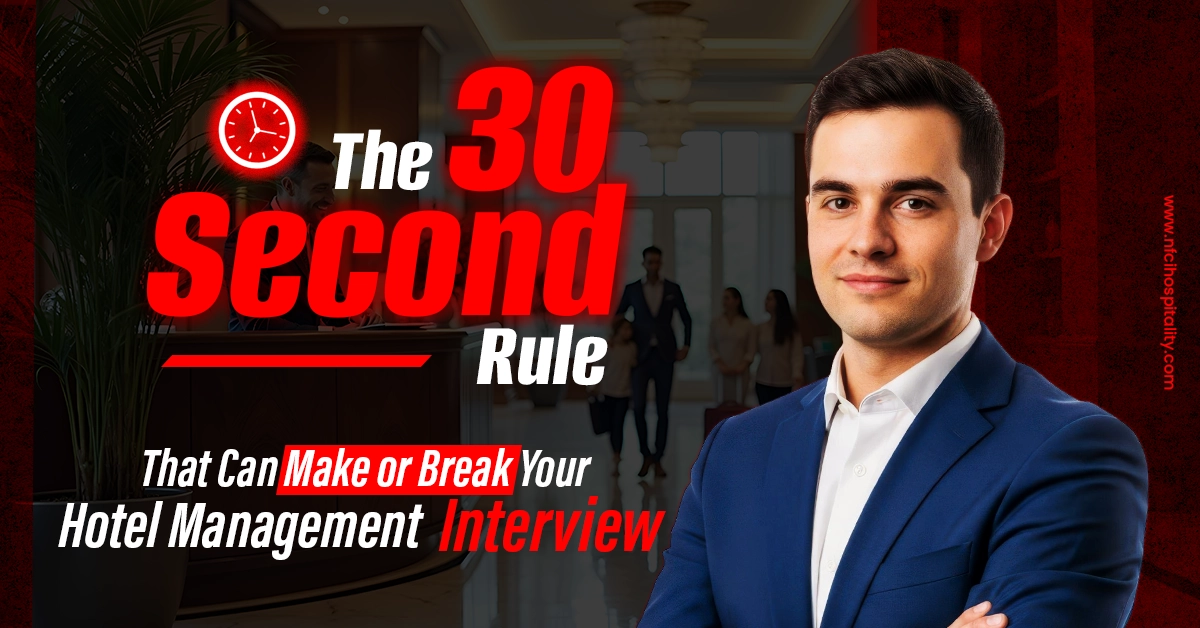
Welcome to the 30-second rule of every hotel management interview.
A candidate’s resume alone is not enough to clear a hotel management interview. Employers look beyond your resume, and in the hospitality world, the saying “first impression is the last impression” holds true.
So, what exactly they notice in those important first 30 seconds? Let’s find out in this guide.
What are Hotel Management Interview Tips?
Hotel Management Interview Tips are actionable strategies, best practices, and preparation guidelines designed to help candidates succeed in job or admission interviews within the hospitality industry. These tips focus on showcasing a candidate’s customer service mindset, leadership skills, problem-solving abilities, and professional presentation.
Why the First 30 Seconds Matter in a Hotel Management Interview?
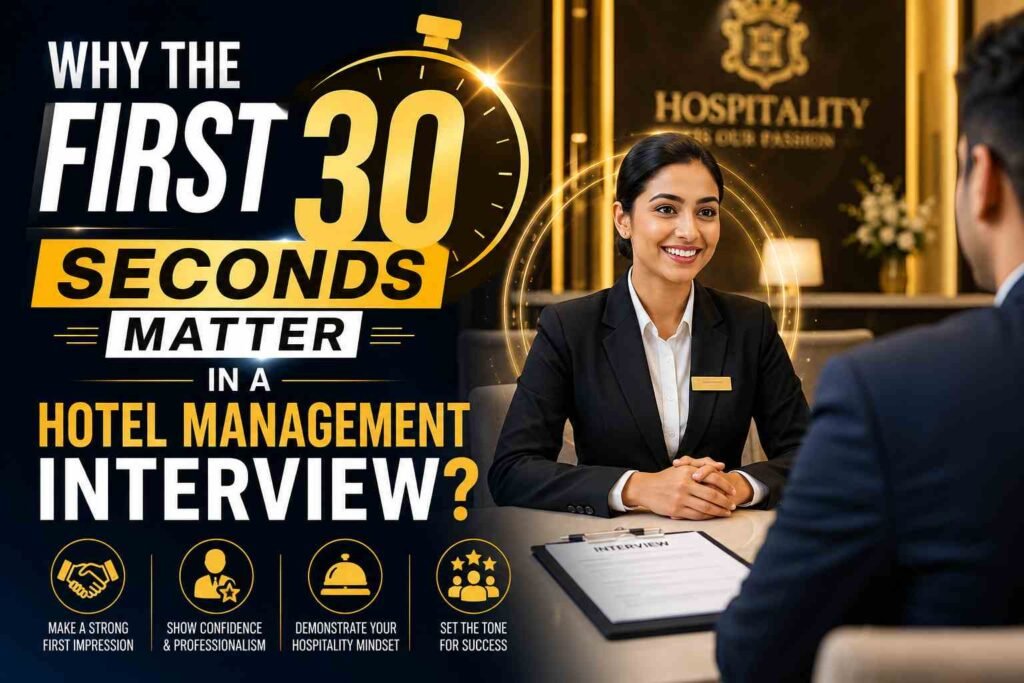
Hospitality is all about creating memorable guest experiences. If a candidate cannot create a positive impression during an interview, job recruiters naturally wonder how they will interact with guests.
That’s why a hotel management interview often begins long before the interviewer asks the first question.
From the moment you enter the room, every detail matters.
1. Your Grooming Creates the First Impression
In hospitality, appearance speaks before you do. It should reflect your professionalism.
The HR team immediately notices the following things:
- Neat hairstyle
- Clean, well-ironed attire
- Properly polished shoes
- Personal hygiene
- Minimal accessories
- Professional body language
Hotels don’t want candidates to be dressed in expensive attire; they expect candidates who understand professional presentation.
2. Confidence: The Secret Interview Skill That Isn’t on Your Resume
Many students worry about speaking flawless English during a hotel management interview.
While communication is important, confidence often creates a stronger impact.
Guest remember confidence. Not perfect English. Self-confidence can outshine perfect english.
Recruiters appreciate candidates who:
- Maintain eye contact
- Smile naturally
- Communicate clearly
- Speak positively
- Stay calm
- Listen carefully before answering
Confidence tells employers that you can comfortably handle guests, complaints, and workplace challenges.
3. Communication Skills: The Right Words Create the Right Impression
Hospitality professionals communicate with hundreds of people every day.
That’s why recruiters carefully observe:
- How you greet them
- Your tone of voice
- Active listening
- Politeness
- Professional vocabulary
- Respectful behavior
Good communication isn’t about using difficult words. It’s about making guests feel comfortable and valued.
4. Practical Skills Speak Louder Than Theory
This is where many candidates lose valuable opportunities.
Imagine being asked:
- How would you greet a guest at the front office?
- What is mise en place?
- How do you handle guest complaints?
- What food safety practices do you follow?
- What is the correct knife for chopping vegetables?
And there is so much more you need to learn. Institutes like NFCI offer hands-on practical sessions to prepare you for real-world challenges.
Theory alone can’t help you clear your interview. Those with practical exposure answer confidently because they’ve already experienced these situations in their classes.
Therefore, hands-on learning has become one of the biggest advantages of modern hotel management education.
5. Knife Skills Reveal Professional Training
For aspiring chefs, even basic knife handling can say a lot about your training.
During practical assessments, interviewers may observe:
- Knife grip
- Cutting techniques
- Safety practices
- Speed with accuracy
- Workstation organization
Strong knife skills shows discipline, precision, and professional kitchen habits. These are the qualities that every employer values.
6. Your Internship Experience Matters More Than You Think
One of the favorite questions asked by job recruiters is: “Tell us about your industrial training or internship.”
This question helps recruiters understand:
- How you performed in a real workplace
- How you handled guests
- What responsibilities you managed during your industrial training
- How quickly you learned all the things
Even a short internship can become your biggest strength if you have genuinely learned from it.
NFCI offers internship opportunities to allow students to work in real hospitality settings. This prepares them to face job interviews with confidence.
7. Positive Attitude Is a Hiring Advantage
In the Hospitality world, positive behavior leaves a lasting impact on your guests.
Technical skills can be taught. Attitude is much harder to develop.
That’s why HR professionals often select candidates who demonstrate:
- Willingness to learn
- Discipline
- Respect
- Teamwork
- Adaptability
- Problem-solving ability
A positive attitude is everything.
8. Passion Is Easy to Spot
Interviewers can usually ask whether you’re genuinely interested in hospitality or simply looking for any job.
They prefer Candidates who :
- Stay updated with hospitality trends
- Follow renowned chefs and hotel brands
- Talk enthusiastically about guest experiences
- Show curiosity about hospitality learning
- Show genuine interest in building a long-term career
Passion creates memorable interviews.
During your hotel management interview, your passion for hospitality should be reflected in your answers.
Common Mistakes Students Make During a Hotel Management Interview
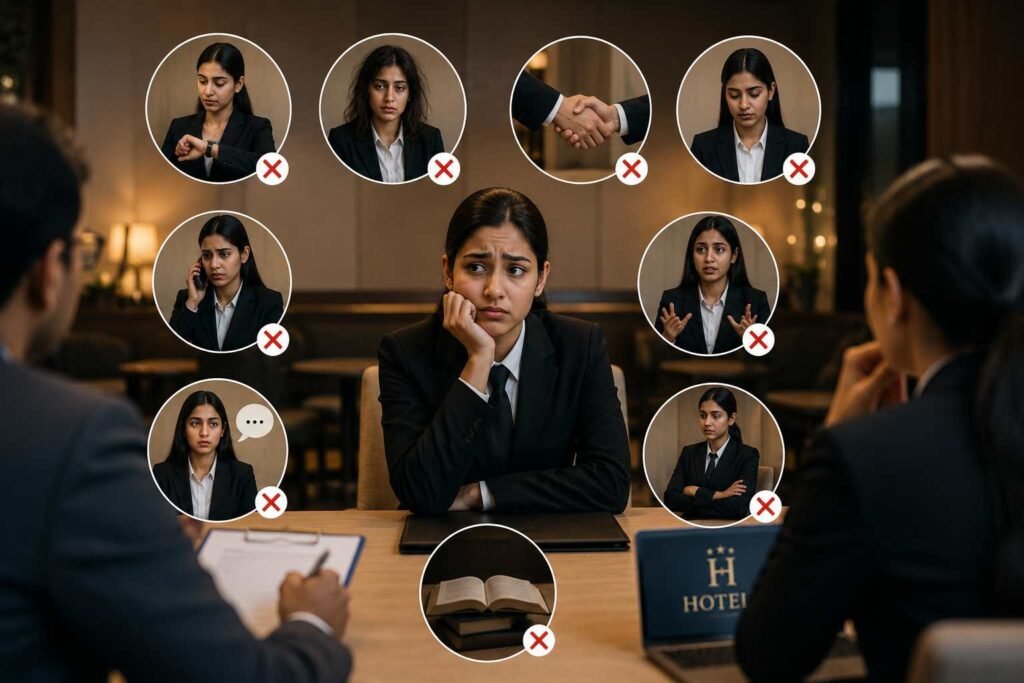
Avoid these common errors in your interview:
- Arriving late
- Poor grooming
- Weak handshake or no greeting
- Lack of eye contact
- Speaking negatively about previous experiences
- Memorized answers that sound robotic
- Limited practical knowledge
- Overconfidence or lack of confidence
- Poor posture
- Not researching the employer
Even small mistakes can influence a recruiter’s decision.
How to Prepare for a Successful Hotel Management Interview?
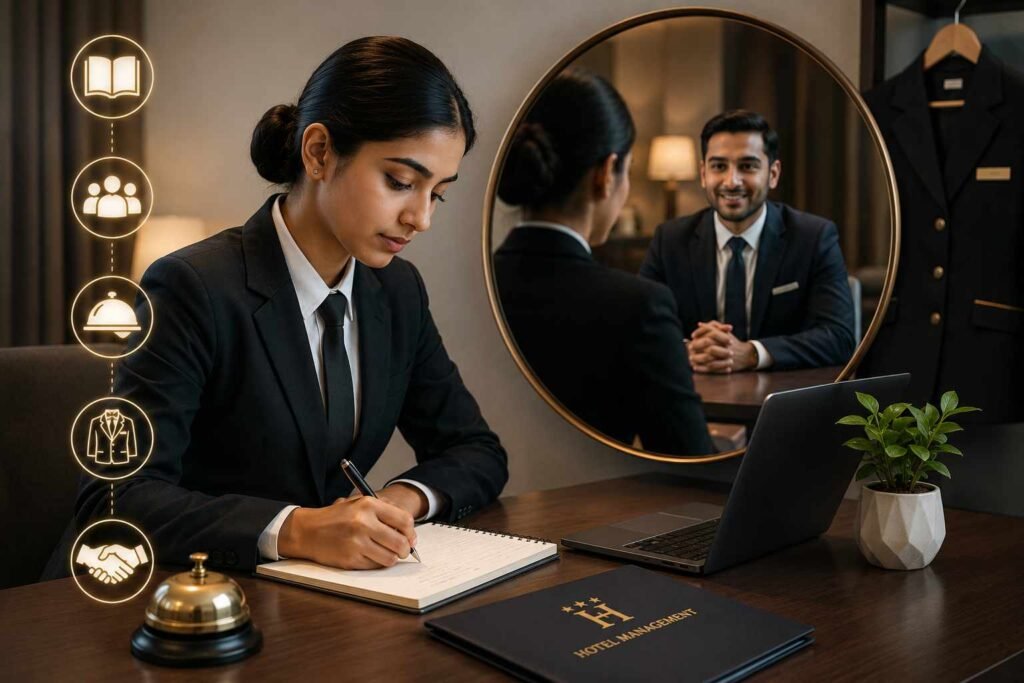
Before your interview, make sure you:
- Practice your self-introduction.
- Revise basic hospitality concepts.
- Improve communication and interpersonal skills.
- Stay updated with current hospitality trends.
- Strengthen your practical knowledge through regular practice.
- Prepare examples from your internship or training.
- Focus on grooming and professional etiquette.
- Be confident, honest, and enthusiastic.
Want to Crack Your Hotel Management Interview? Start Before Interview Day!
Great Interviews Begin Long Before Interview Day!
The truth is, success in a hotel management interview doesn’t start when you walk into the interview room. It begins months or even years earlier with the right learning environment.
Students who receive practical training, industry-relevant exposure, internship opportunities, personality development sessions, communication training, and interview preparation often crack interviews with greater confidence because they’ve already practiced the necessary skills employers expect.
If you are looking to learn the skills required in hotel management, NFCI is one of the best hotel management and culinary institutes in India, with 36+ years of excellence. This professional institute has been shaping students into highly skilled professionals through its well-structured curriculum, specifically designed to prepare students to become job-ready from day one.
Through practical kitchen sessions, hospitality labs, industrial training, soft-skill development, and guidance from experienced faculty, students are prepared to meet real industry expectations. Dedicated placement support, an active placement cell, and 100% placement assistance help students confidently pursue opportunities with hotels, restaurants, cafés, airlines, and cruise lines.
Because in hospitality, getting the interview is only the first step; being ready for it is what truly makes the difference.
If you’re pursuing hotel management, enrolling in cooking courses, or planning to join a professional cooking course, remember that employers aren’t just hiring qualifications; they’re hiring future hospitality professionals.
Admissions are open at NFCI!
Apply today or call at 98880-11222 for a free counselling session.
Our website: www.nfcihospitality.com
The next time you walk into an interview room, remember the 30-second rule. Those first few moments may be silent, but they can speak louder than your entire resume.

You may also like

How to Plan Your Food Menu for Better Sales and Lower Costs?

Hotel management course fees in India 2026 | A Complete Guide